The short answer
Espresso and filter coffee are two brewing methods, not two coffee varieties. With espresso, a machine forces hot water through finely ground coffee under pressure. With filter coffee, the water runs through slowly and without pressure. The same bean can end up in either cup.
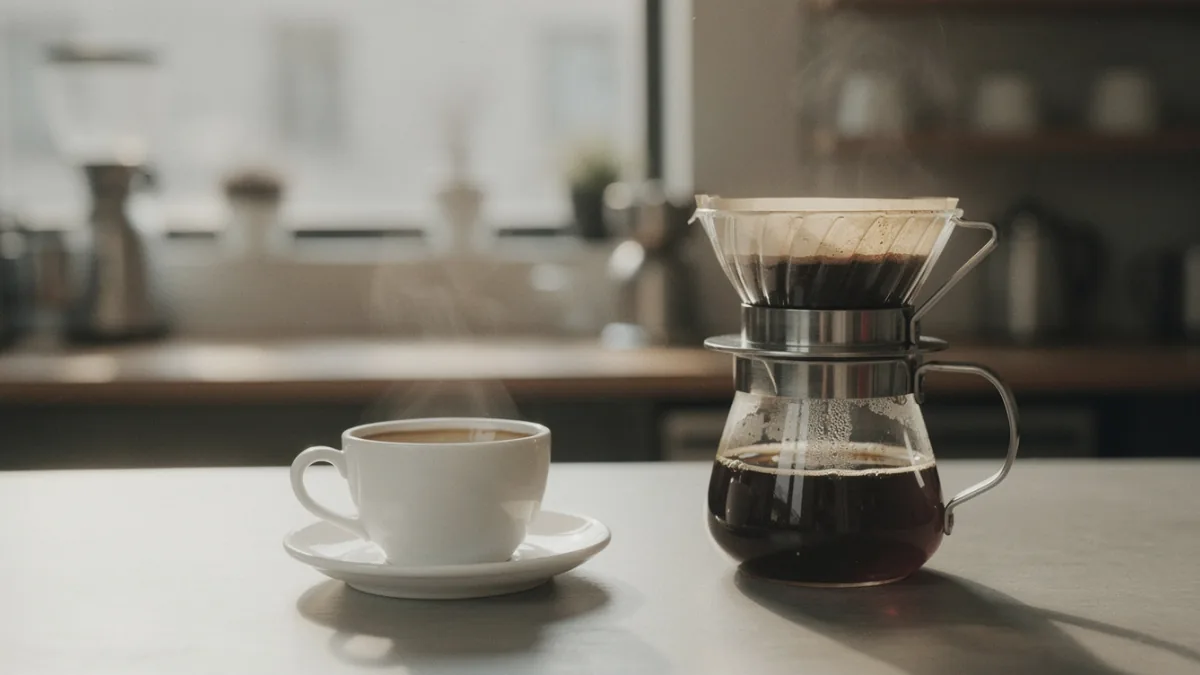
Pressure versus gravity
An espresso is a small, concentrated shot. Filter coffee is usually drunk from a larger cup, and it's more dilute. That said, this tells you little about caffeine content. How much of it ends up in the cup depends on the bean, the amount of coffee used, and the brewing method. So a small cup doesn't automatically mean low caffeine.
The real difference is the pressure. An espresso machine forces water through finely ground coffee at high pressure, and does so in a short amount of time. With filter brewing, only gravity pulls the water downward. It drips slowly through the ground coffee. The two methods have almost nothing in common.
Everything else follows naturally from that. A small amount of water hits a large amount of coffee within seconds, producing a dense, intense result. A larger amount of water passes slowly through less coffee, producing a lighter, clearer result. From the very same bean, two very different drinks emerge.
The crema comes from the pressure too. That's the brown foam sitting on top of an espresso. Coffee contains dissolved carbon dioxide, a gas. Under pressure it stays dissolved; once released, it foams up. Filter coffee has no crema because it lacks that pressure.
So this foam isn't actually a sign of quality. It simply shows that pressure was involved in the brewing.
What an espresso bean actually means
Many packages carry the word espresso. What's meant is a bean the roaster selected or roasted for this brewing method. You're not buying a separate plant species.
The National Coffee Association, or NCA, says it plainly: espresso roast isn't a fixed roast level. There's no point at which a bean officially becomes "espresso." The roaster decides what to call it.
Nothing stops you from brewing an espresso bean in a pour-over. The result will just taste different than the roaster intended. The same holds true the other way around.
The label is still useful, though. It tells you what the roaster was aiming for when blending and roasting. It's not a promise about how it'll taste in your cup.
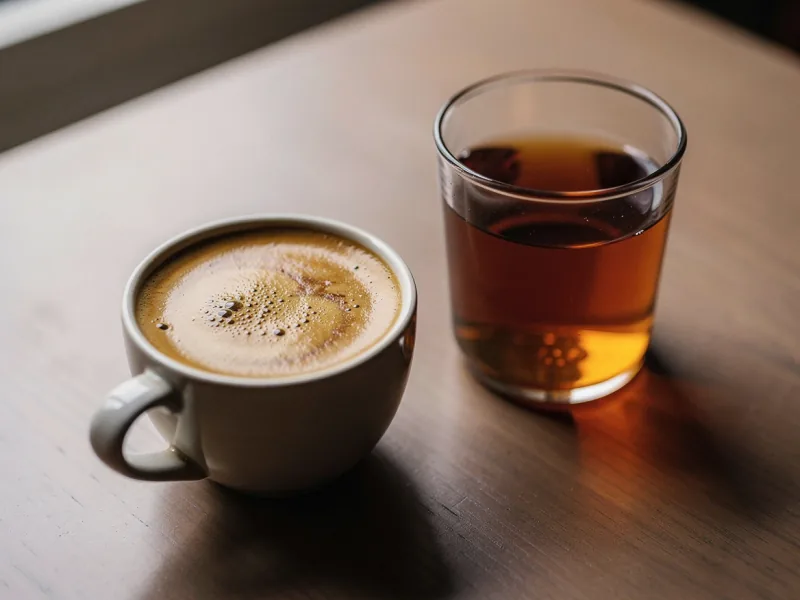
Think about your own routine first
Start by asking what you actually want to drink in the morning. A big mug of black coffee? Then good filter coffee is your goal, not a failed espresso. It's a drink in its own right, with its own standards.
If instead you're after a small, concentrated shot, the method needs the right settings. Grind size, coffee dose, and time all have to work together. If they don't, even an expensive machine won't help much.
So compare the two based on the drink you actually want. More pressure doesn't answer the question of what tastes better to you in the morning. Neither does a pricier machine.
That leads to a simple piece of buying advice. If you drink a big mug in the morning, you don't need an espresso machine. A good pour-over and a decent grinder cost a fraction of the price. For that purpose, they'll even give you a better result.
And if you're only buying one thing, make it the grinder. It matters more than the brewer, for both methods.