The short answer
Weigh your coffee and water and change only one thing at a time. That way you'll spot what's really at fault: the dose, the grind, the water, or the time.
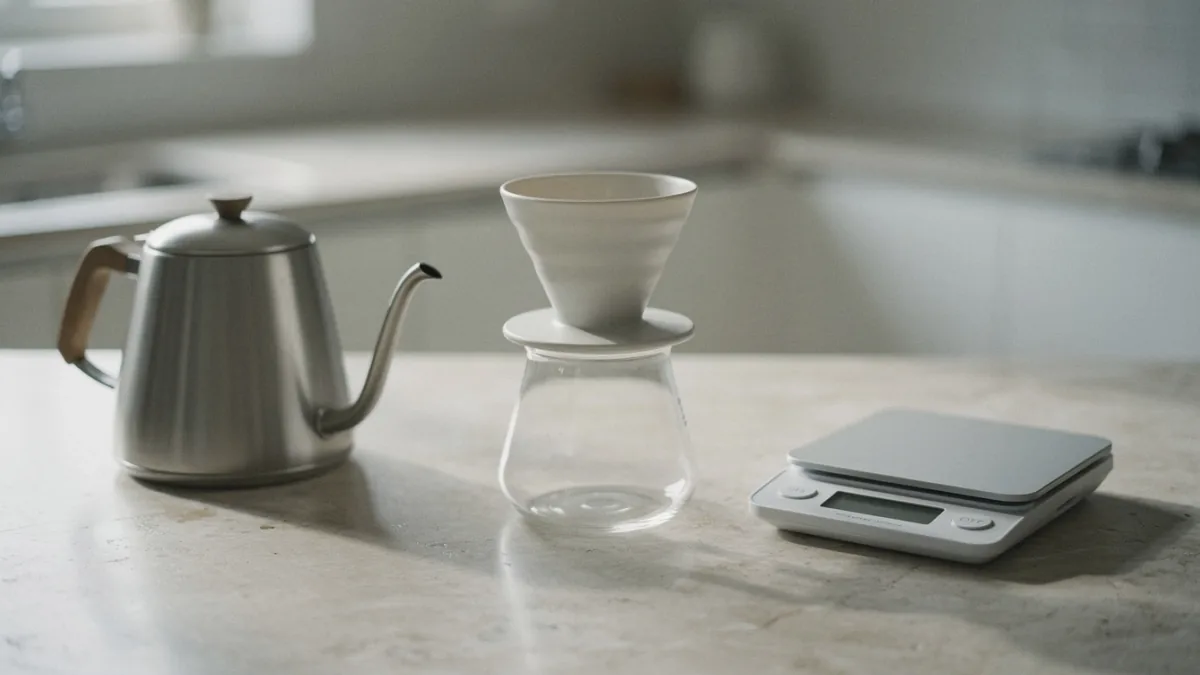
Without a scale, you're guessing in the dark
If you dose a little differently every morning, you can't figure out why a cup tastes off. A simple kitchen scale is enough. Write down: how much coffee, how much water, which method, and how it tasted.
This isn't lab work. Three numbers and a sentence will do. Even the National Coffee Association recommends weighing coffee and water for pour-over. It's the only way to recreate a great cup exactly.
A starting point for pour-over: 15 grams to 240
For a small cup, use 15 grams of coffee to 240 grams of water. That's a ratio of 1 to 16, right at the edge of what the NCA recommends for pour-over. The water should be around 93 degrees Celsius. Whether that suits your coffee is something you'll find out by tasting.
Time how long the water takes to pass through. It doesn't need to be exact to the second. Next time, use the same filter and the same amount. Only then will a different grind setting actually tell you something.
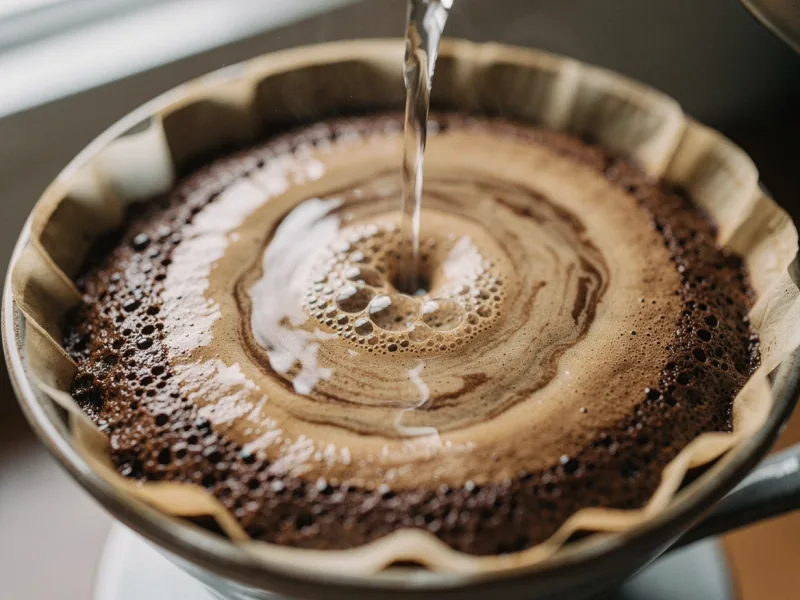
Strong and bitter are two different things
A coffee can taste thin and still be bitter. "Stronger" is therefore not a useful description. Ask yourself more precisely: Is it lacking body? Is it too acidic? Or does it leave a dry, bitter impression at the finish?
If only the concentration bothers you, adjust the coffee-to-water ratio. If the overall flavor feels unbalanced, look at the grind size and brewing method. There's no rule saying every sour coffee has the same flaw. Sometimes it's simply that the bean isn't to your taste.
Grind size depends on the method
Espresso needs fine grounds and pressure, while pour-over works completely differently. That's why no one can give you a single grinder setting that works everywhere. Even two identical grinders can end up calibrated differently.
Adjust in small steps and keep the dose and process consistent while you do. If you buy pre-ground coffee, tell the seller how you'll brew it. "For the machine" doesn't help anyone, since that could mean a drip machine, a super-automatic, or a portafilter espresso machine.
Espresso roast isn't a separate bean
Light, medium and dark describe the roast level, but they don't tell you everything about flavor. The NCA points out that every roaster uses these terms slightly differently. An espresso roast isn't its own plant — it's just dark in its own particular way everywhere.
If your method otherwise gives good results and it's only a new bean that doesn't taste right, your machine isn't broken. Next time you buy coffee, describe what bothered you: too roasty, too fruity, too thin. That will get you further than searching for the one perfect bean.
Wash thoroughly, store cool and dry
Clean all parts as the manufacturer instructs. Otherwise old coffee residue and rancid oils will taint every new cup. Beans are best kept cool, dry and well sealed. The NCA names heat, moisture and air as the things that age coffee fastest.
When a new machine is really worth it
If your routine stays the same, you'll notice exactly what the machine is holding you back on: the grinder won't go fine enough, the dose is hard to hit precisely, or the everyday handling is a hassle. Then you'll know what to look for.
A pricier machine won't turn a bean you don't like into a great cup. Often a clean comparison using the same coffee tells you more. It's about getting a better cup, not a longer feature list.