The short answer
The fastest way to chill wine is in a bucket with ice, water, and a handful of salt. Turn the bottle now and then, and it's ready to drink after about 15 to 20 minutes. The freezer also works, but it takes longer, and a forgotten bottle can freeze there and push the cork out.
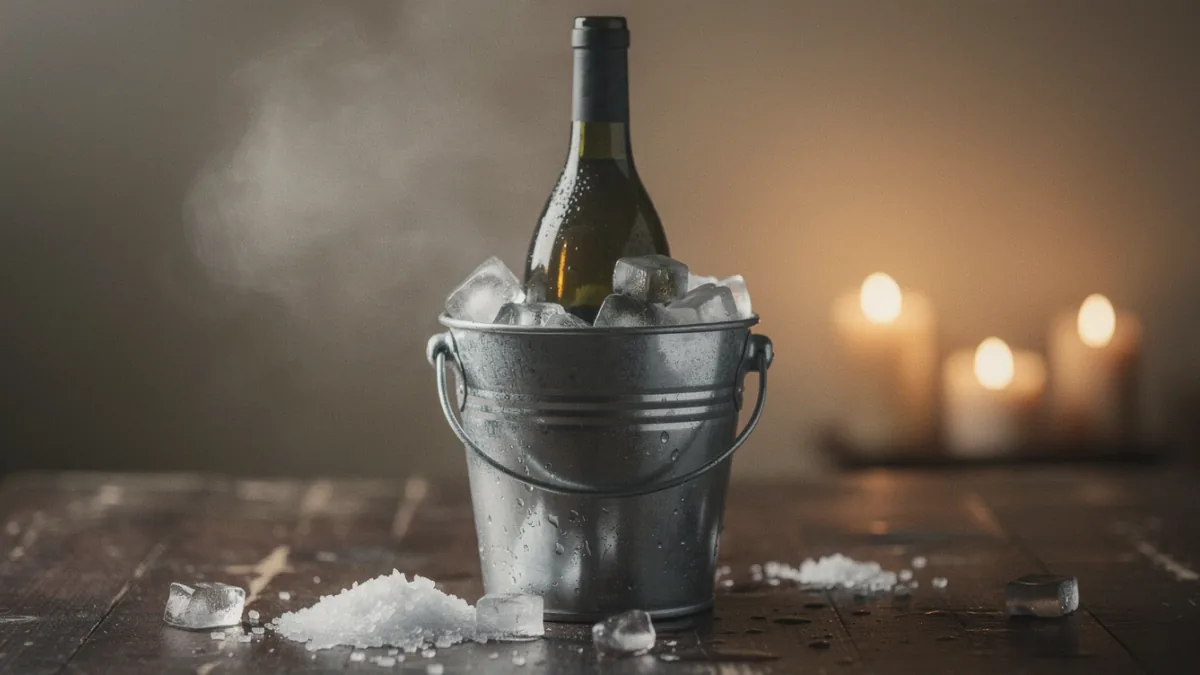
The fastest method: ice water with salt
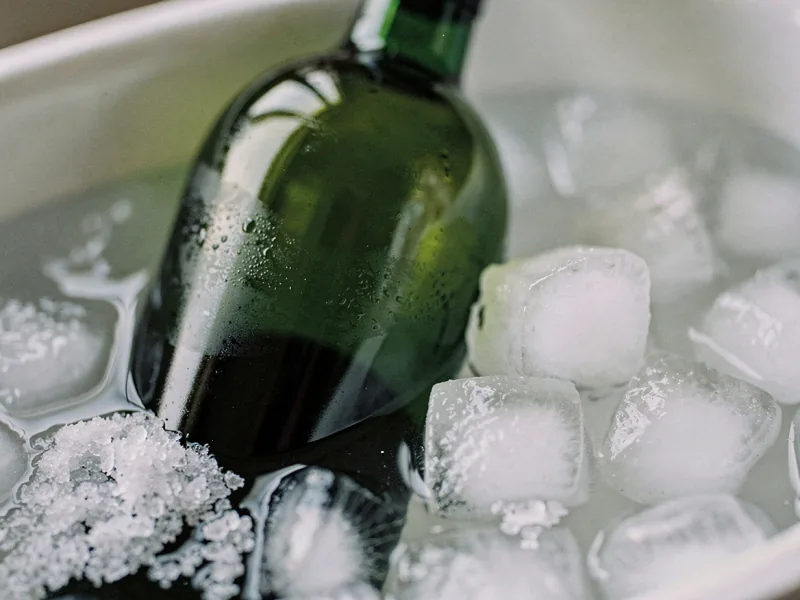
The quickest way to bring a bottle down to temperature is an ice, water, and salt bath. Wine Spectator describes it the same way, and according to their guidance, the wine is ready after about 15 to 20 minutes. Fill a bucket or a large pot with ice cubes, add cold water until the bottle is submerged up to the neck, and sprinkle in a generous handful of salt.
Turn the bottle by the neck a few times while it chills. This keeps the cold water moving so a warmer layer doesn't build up against the glass and slow the cooling down. If you stand by and turn it often, you'll finish faster than if you leave the bucket to do the work alone.
Why water and salt chill so much faster
Ice alone only touches the bottle at a few points, with air in between. Water, on the other hand, is in contact with the glass everywhere and conducts heat away far better than air. That's why a bucket of ice water chills much faster than one filled only with ice cubes.
The salt lowers the freezing point of the water. This makes the ice melt faster, and as it melts it draws heat from its surroundings, including your bottle. The mixture becomes colder than plain ice water. The exact amount of salt doesn't matter much, a handful per bucket is enough.
Chilling wine in the freezer: only with a timer set
The freezer works, but it's slower than the ice water bath. It goes a bit faster if you wrap the bottle in a damp kitchen towel beforehand and lay it flat inside. Set a timer no matter what.
Because a forgotten bottle is the real risk. Wine is mostly water, and freezing water expands. That can push the cork out or crack the bottle. It's especially risky with sparkling wine, since there's already pressure inside the bottle. So put Champagne and sparkling wine in the ice water rather than the freezer.
Cooling sleeve, wine cooler, and refrigerator
A cooling sleeve from the freezer only touches the outside of the bottle. It's best suited for keeping an already chilled bottle cool at the table. For quickly bringing down the temperature of a warm bottle, the ice water bath is the better choice.
The refrigerator is the most convenient but slowest solution, since cold air only transfers cold to the bottle sluggishly. Just plan ahead and put the wine in during the afternoon if you want to open it in the evening. A double-walled wine cooler doesn't chill on its own, it only slows the warming at the table.
What temperature should the wine be?
Cold doesn't automatically mean right. Wine that's too cold loses aroma, while wine that's too warm quickly tastes of alcohol. The German Wine Institute gives reference values for serving temperature. They help you avoid overshooting the mark when chilling.
| Wine type | Serving temperature |
|---|---|
| Sparkling wine and rosé sparkling wine | 43 to 46 °F |
| young, light white wines such as Riesling Kabinett | 48 to 52 °F |
| rosé wines, such as Weißherbst | 48 to 55 °F |
| mature, full-bodied white wines | 52 to 55 °F |
| young, light red wines such as Portugieser or Trollinger | 57 to 61 °F |
| mature, full-bodied red wines | 61 to 64 °F |
| very tannic red wines aged in barrique | 64 to 68 °F |
Red wine can go in the ice water too, briefly
The table shows that even full-bodied red wines stay below the temperature typical in a home during summer. If a red wine sits on the shelf in warm weather, it quickly tastes flat and alcoholic. A few minutes in ice water or the refrigerator brings it back into its proper range.
Light, fruity red wines can even take a bit more chilling. If you're unsure, err on the side of chilling too much. The wine will warm up quickly in the glass anyway, whereas a wine served too warm can hardly be saved at the table.
Ice cubes in the glass and other quick fixes
An ice cube in the wine glass chills quickly but dilutes the wine with every sip. For a simple summer wine at a barbecue, that's a matter of taste. For a good wine, it takes away exactly what you opened it for.
Frozen grapes are the better quick fix, since they don't release water. But for a whole bottle, the ice water bath remains the fastest choice. If you often have guests on short notice, keep one or two bottles permanently in the fridge, then you'll never need a quick fix.
And if it's gotten too cold after all? Just pour the wine and let it stand for a few minutes. Cup the glass in both hands, the warmth from your hands helps too. Many white wines only reveal how much aroma they really have once they've warmed up a little. So a wine that's too cold is never a lost cause, it just needs a bit of time.
The right temperature with Gustofolio
Gustofolio shows you the right serving temperature and drinking window for every wine in your collection. That way, you know when choosing a bottle whether it needs the ice water or just a few minutes out of the cellar, and you won't open a wine that should still wait.
Frequently asked questions about fast chilling
These questions come up most often when time is short.
How long does wine need in ice water?
With ice, water, and salt, a bottle is ready to drink after about 15 to 20 minutes if you turn it now and then.
Can sparkling wine go in the freezer?
Better not to. There's pressure inside the bottle, and if the contents start to freeze, the cork can shoot out or the bottle can burst. The ice water bath is the safe choice for sparkling wine.
Does fast chilling harm the wine?
No. The only thing that matters is that it doesn't freeze and doesn't get noticeably colder than its serving temperature.
Can I let chilled wine warm up again?
Yes. Chilling it once and letting it warm up again doesn't harm the wine. Constant back and forth over weeks, however, is bad for storage.