The short answer
Sparkling Tea is a fizzy beverage based on tea. Products differ greatly in tea, sweetness, acidity and alcohol content. The name guarantees neither alcohol-free nor sugar-free. So read the details on the specific bottle.
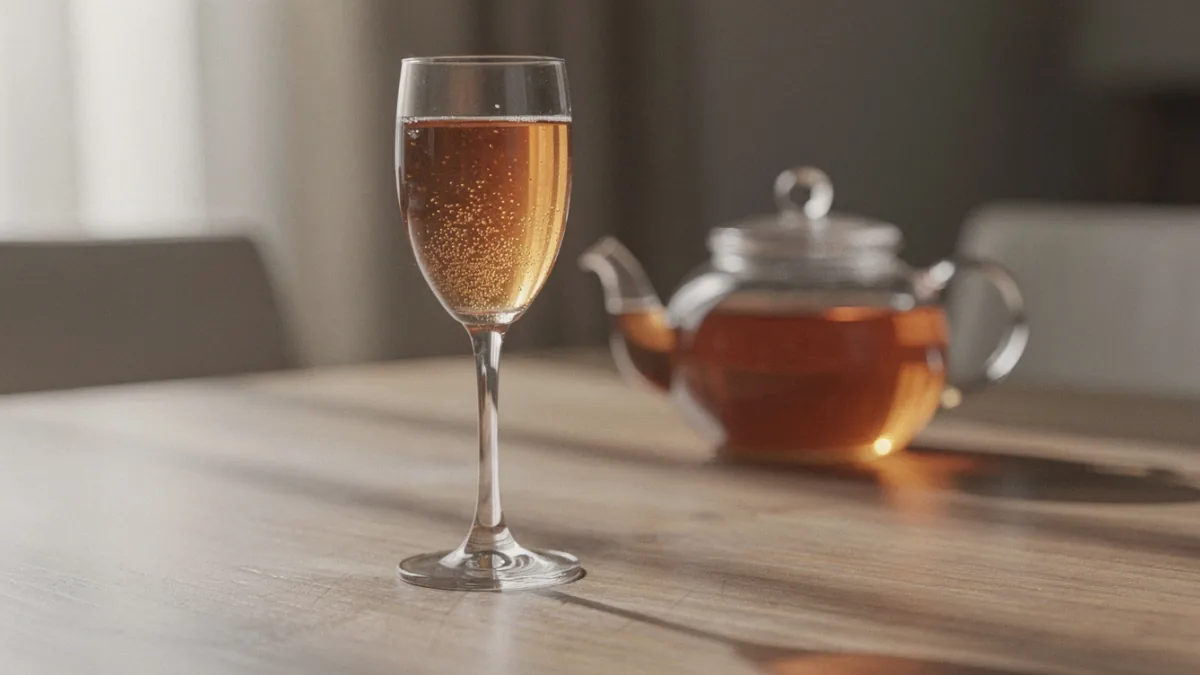
Tea as the flavor foundation
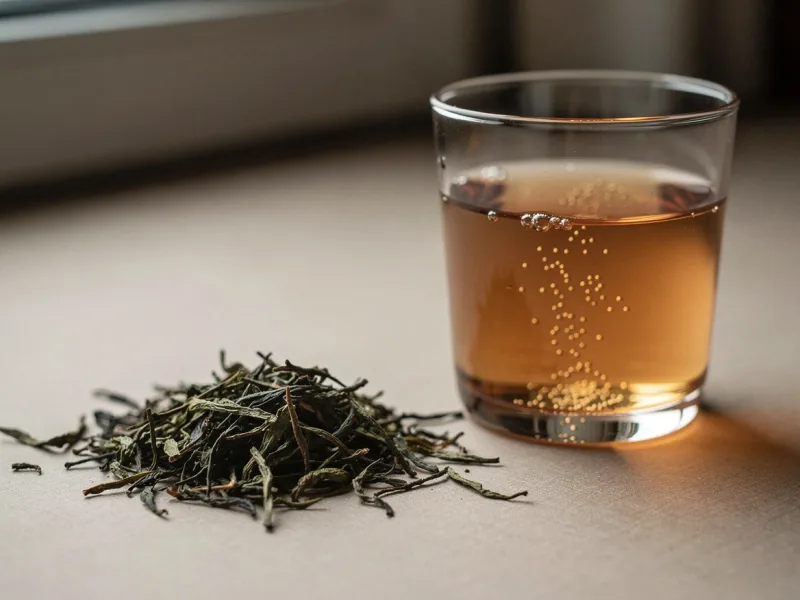
The foundation is brewed tea. White, green or black tea each bring their own notes: floral, fruity or roasted. Tannins come along with that. You know them from strongly steeped black tea, which makes the mouth feel slightly dry and furry.
The idea behind this is the same as with wine. Tannins provide structure, acidity provides freshness, and carbonation carries both. Tea naturally supplies tannins. It's exactly these that most alcohol-free alternatives lack. That's why they often start to feel tiring after just half a glass.
Some producers blend several types of tea like a cuvée, meaning a blend. Others rely on a single variety. Both approaches are fine and lead to very different results.
There are no fixed rules for this category. So the name Sparkling Tea says little about the contents. Some products work with infusions and added carbonation, others with further processing steps. The description of the individual bottle helps you more than the umbrella term.
Not automatically kombucha or alcohol-free wine
Kombucha is something different: it's fermented. Sparkling Tea is not an umbrella term for this process.
The difference lies in the process. During fermentation, microorganisms work within the drink itself and transform it. A sparkling tea can emerge this way, but doesn't have to. Many products are simply brewed and then carbonated.
This drink also shouldn't be equated with dealcoholized wine. If you want to avoid alcohol, check the actual labeling. An elegant sparkling wine bottle tells you nothing about its contents, and certainly nothing about its alcohol content.
Some bottles contain alcohol, others don't. The information is found wherever it's found on any drink: on the label. Don't rely on the word tea in the product name.
How to compare different products
Pay attention to four things: sweetness, acidity, tannin, and carbonation. A product that tastes dry can still contain sugar. The nutritional information answers a different question than your taste impression. Only both together give you the full picture.
Serve well chilled at first. Then let a small remainder warm up a bit and taste again. The tea aromas often come through more clearly this way.
Use a wine glass, not a champagne flute. That might sound like a minor detail, but it makes a big difference here. These drinks live on aroma. A narrow champagne flute releases too little of it.
Which foods pair well?
Floral and light styles pair well with delicate starters. More tannic or roasted varieties can stand up to heartier dishes. This is a good starting point for your first attempt.
Test it with the actual dish. A sweet sauce changes the perception significantly. So try a sip before the meal and one alongside it.
Sparkling tea doesn't need to imitate wine. Its own combination of tea, acidity, and fizz can be exactly what makes it appealing. Judge it for what it is.
Jot down a sentence after the meal. Did it work, was it too sweet, or too bitter? Two or three such notes are enough to help you choose more precisely on your next purchase.