The short answer
Vermouth is wine that's been aromatized with botanicals and fortified with alcohol. Dry, Bianco, and Rosso are three styles. An opened bottle belongs in the fridge, not on the home bar shelf.
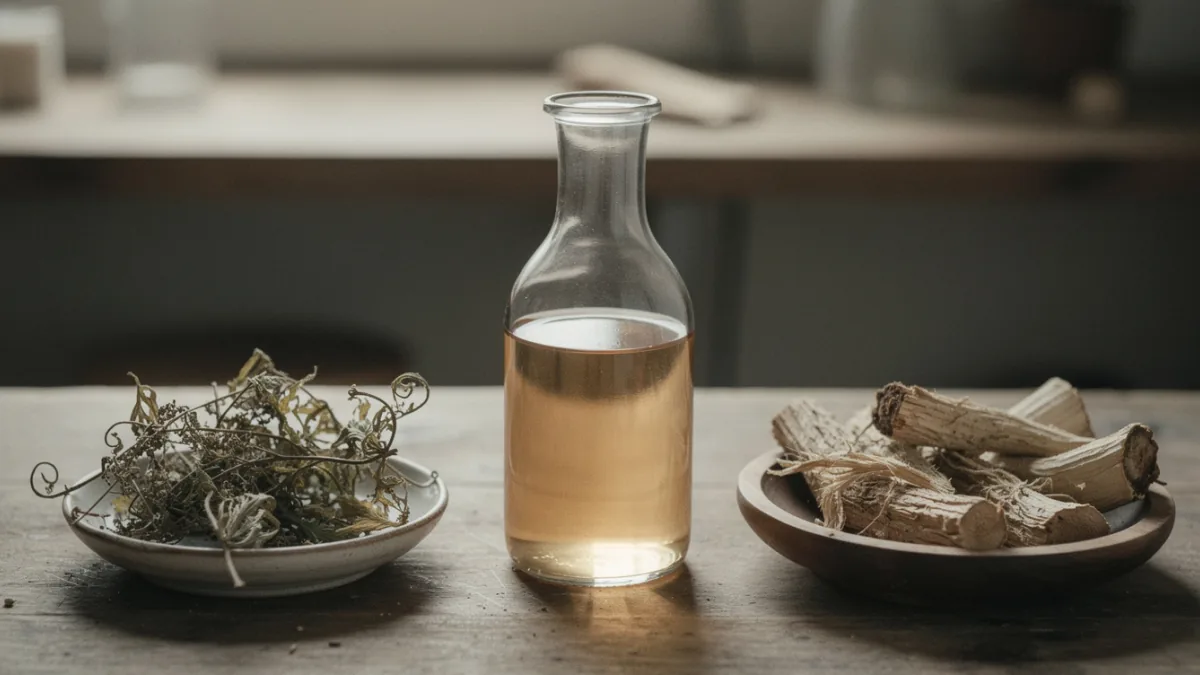
Vermouth Is Wine, Not a Spirit
The base is wine. Added to it are herbs and spices, usually sugar, and a bit of alcohol. How much of what varies a lot from brand to brand — and the recipe often shapes a cocktail just as strongly as the gin or whiskey in it.
The name comes from the plant wormwood (Artemisia). It's traditionally used for flavoring and contributes the characteristic bitter note.
From "wine" follows the most important rule for handling it: at 15 to 18 percent ABV, an open bottle behaves like wine, not like gin. Leave it sitting for months, and eventually you're mixing with oxidized vermouth. That's the most common reason behind a disappointing Martini.
Dry, Bianco, and Rosso
Dry is, well, dry, and usually goes into a Martini. Bianco is pale and sweeter. Rosso is reddish-brown and spicy-sweet. These are broad shopping guides, not precise flavor descriptions — a pale vermouth isn't automatically dry. What's actually inside is stated on the bottle.

Which Vermouth Goes in Which Drink?
A Negroni and a Manhattan call for sweet red vermouth. A Dry Martini calls for dry. Swap the two, and you'll noticeably shift both the sweetness and the herbal character. So buy for the recipe you're planning to make — and taste the vermouth on its own in a small amount first. Then you'll know exactly what it's doing in the drink.
The mixing ratio has shifted a lot over the years. Early Martini recipes often called for equal parts gin and vermouth; today, five or six parts gin to one part vermouth is standard. If you find your Martini too sharp, there's a simple fix: more vermouth, not less.
After Opening: Fridge, Not Bar Shelf
Cap it, put it in the fridge, and write the opening date on the bottle. Whatever the producer recommends applies on top of that — there's no single number that works for every vermouth. And more gin won't bring stale vermouth back to life.
As a rough guide: an opened vermouth keeps well in the fridge for about a month, after which it noticeably flattens out. If you mix only occasionally, you're better off with a small bottle than the cheaper liter size.