The short answer
Toppings and sauce make the real difference with pizza. A lighter wine for margherita and a bolder one for roasted meat toppings are possible directions—not requirements.
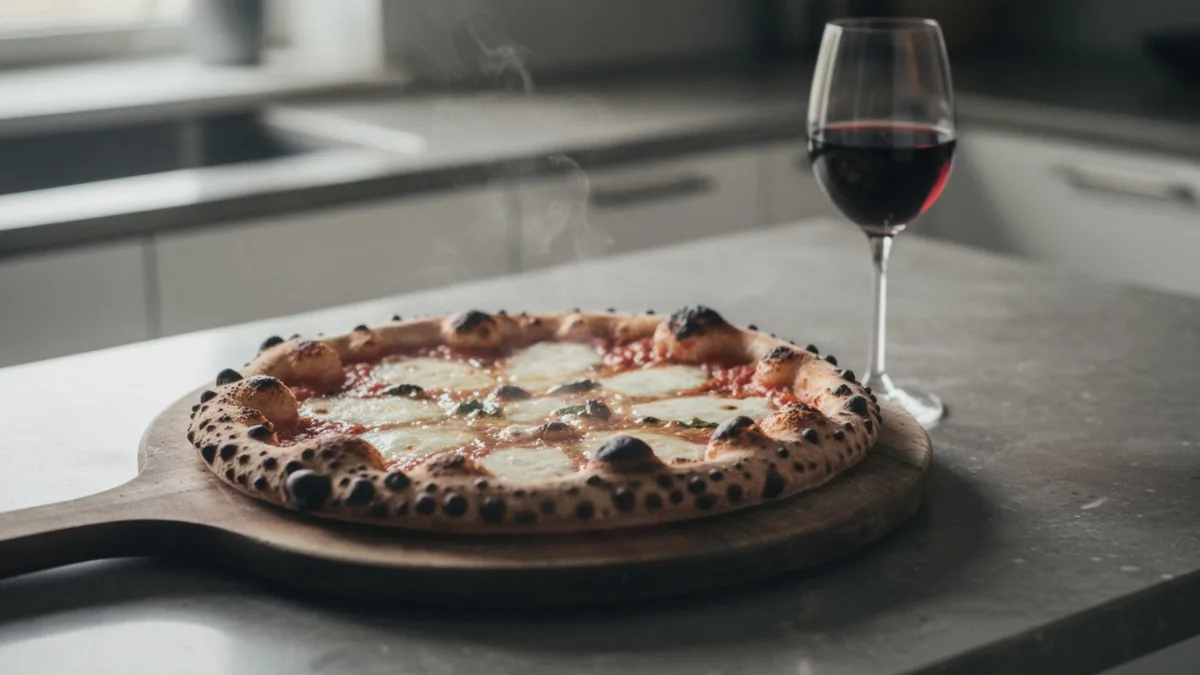
What's on the pizza
With margherita, I'd try a fresh, uncomplicated wine. With mushrooms and a white sauce, a white wine with a bit more body can be more interesting. Spicy salami deserves its own consideration: heat and high alcohol can amplify each other unpleasantly.
Depending on the pizza, the right companion can look very different. This doesn't mean a pizza necessarily needs an Italian red. Beer, sake, or a non-alcoholic alternative are equally valid directions.
Tomato sauce itself brings plenty of freshness. A wine that's also fresh often comes across as rounder next to it than it would on its own in the glass. Without that freshness, it tastes flat and tired alongside the sauce. So the suggestion of an uncomplicated wine for margherita isn't a style rule—it describes what the sauce does to the glass.
With spicy salami, it's worth looking at the underlying cause. Heat is a sensation of warmth, not a flavor, and alcohol amplifies that sensation. That's exactly why a very bold wine can backfire here, even though it seems like it should match a bold topping. If your mouth is burning, a sip of water brings more relief than another sip of wine.
Pizza with white sauce and mushrooms goes in a different direction: less acidity, more roasted notes, more dairy richness. A white wine with a bit more body has more room to work there, since it doesn't have to compete with tomato. The difference is clearest when both pizzas are on the table at the same time.
Ordering for a group
If several people are sharing a bottle, look for an accessible style. The one perfect pairing for a single topping doesn't help the whole table much. Ask beforehand whether white, red, or no wine at all is preferred.
For your own comparison, one evening with two different pizza slices is enough. Note whether the wine still tastes fruity next to the tomato and whether the topping overwhelms it. A short sentence will help you more later than a label reading 'pizza wine.' The best choice is the one you still enjoy by the last slice.
At the table, temperature often matters more than where the bottle is from. Pizza arrives hot. A red wine poured too warm quickly feels heavy and boozy next to it. Served a touch cooler, the same wine tastes crisper and pairs better with the tomato. If preferences vary widely, a glass poured individually per person is the calmer solution.
People sharing a bottle usually drink it over the whole meal. That argues for a wine that still feels pleasant by the fourth glass, not one that only impresses with the first bite. After the evening, it's better to note what bothered you. Annoyances tend to repeat themselves; enthusiasm is harder to reproduce.
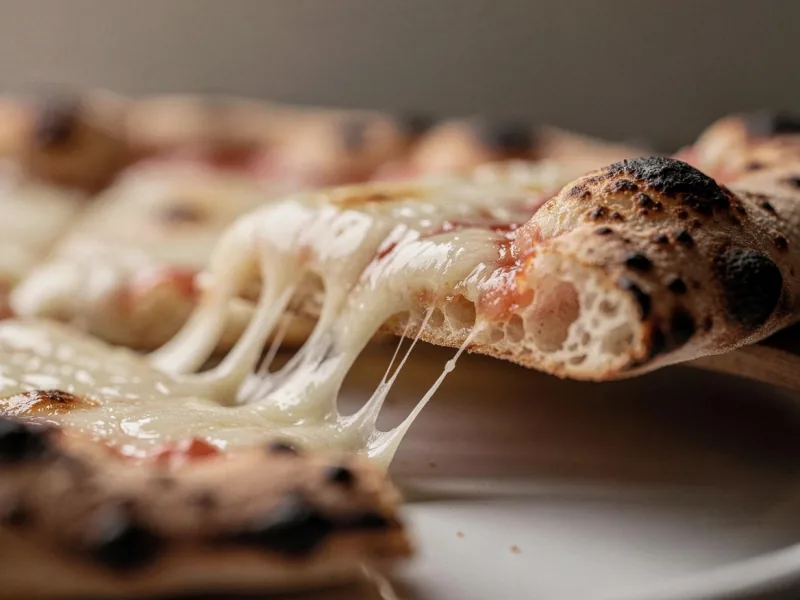
Which Wine for Which Pizza Preparation?
Three typical pizzas, three wine directions, and the reason behind each: the reasoning carries further than the recommendation itself. Once you understand what matters with acidity, body, and heat, you can also place toppings that aren't covered here.
Take these lines as a starting point for your next experiment, not as a match that has to hold true. If your own experience differs, trust your own experience as the better guide. Change only one variable at a time: the same pizza with a different wine, or the same wine with a different pizza. That's how you learn what the effect actually depends on.
| On the plate | Suggestion to try | What matters |
|---|---|---|
| Margherita | Fresh, lighter-bodied wine | Try the tomato and cheese together as a bite. |
| Mushroom and cheese | A bit more body | Take mushroom flavor and cheese intensity into account. |
| Spicy salami | Restrained alcohol warmth and tannin | Chili heat isn't the same challenge as roasted notes. |
Why the topping matters more than the crust
The most common assumption is that pizza needs Italian red wine. The cuisine originated in Italy, but that doesn't automatically make the rule true. What matters is what's actually on the plate. That same logic sometimes points to a white wine, sometimes to beer, sake, or a non-alcoholic alternative. Origin is a convenient starting point, not a substitute for looking at the sauce and toppings.
The second misconception is: the bolder the topping, the bolder the wine should be. With roasted meat toppings, that can work out fine. With spiciness, the equation hits its limits. Bold often also means high in alcohol here, and that intensifies the burning sensation. Bold in flavor and bold in alcohol are two different things, even though they frequently go hand in hand.
What to consider when ordering
Before worrying about any wine name, clarify three simple points about the pizza. Is there tomato sauce underneath, or a white base? Is there anything spicy on top? Is there richly seared or roasted meat? With these answers, you'll almost always land in a workable direction, without needing to memorize the wine list.
If the table orders different pizzas, there's no single perfect bottle for everyone anyway. In that case, an easy-drinking style is the more honest choice. And if someone at the table doesn't want wine, that's not a compromise. It's simply a different decision for the same meal.