The short answer
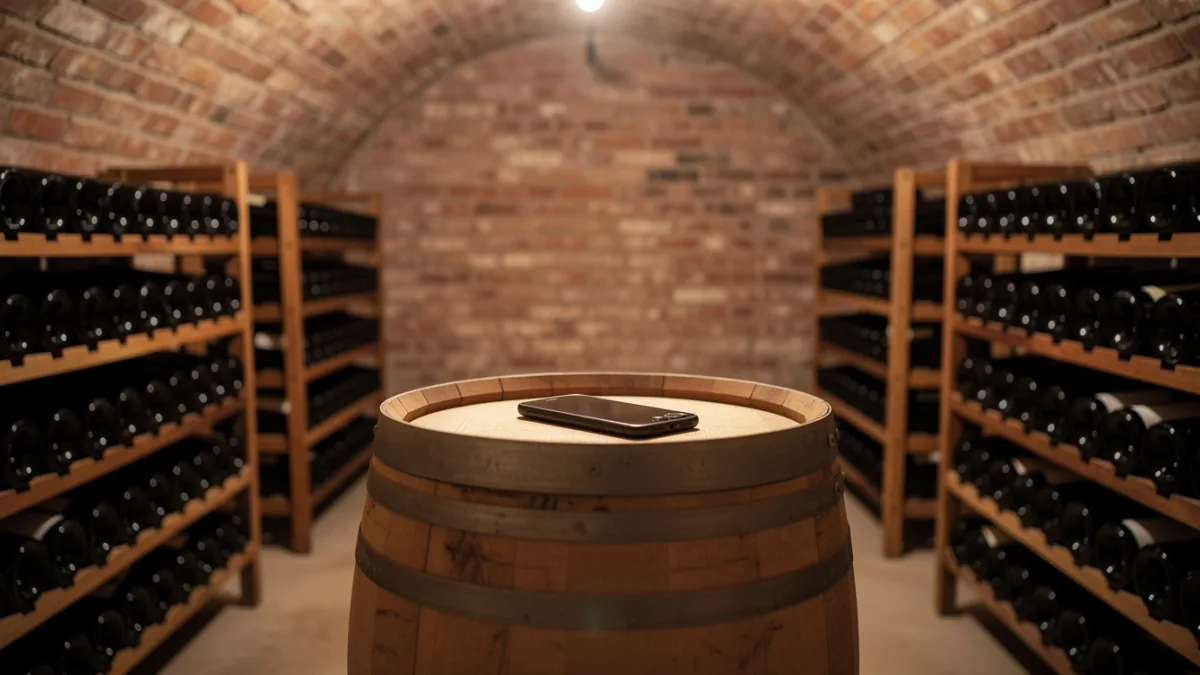
A wine cellar should average 50 to 54°F, and the temperature should stay as consistent as possible. Humidity is best kept between 50 and 70 percent. Measure both with a thermo-hygrometer at bottle height, and look at the readings over several weeks, not just on a single day.
What temperature does a wine cellar need?
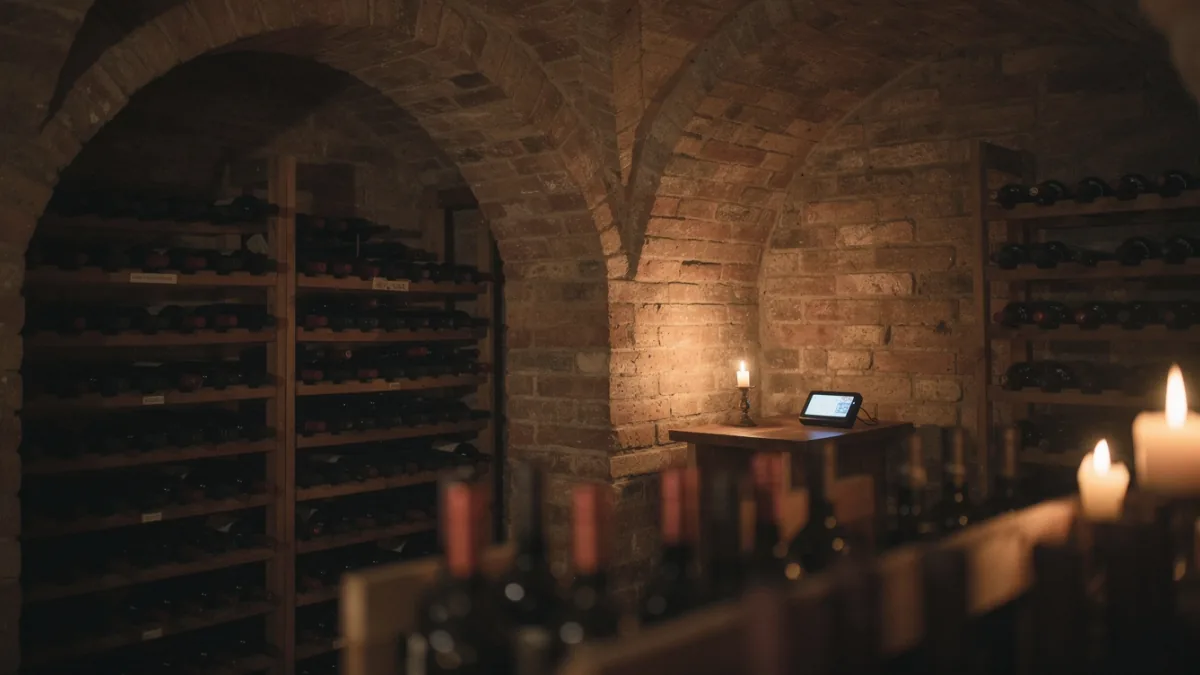
The German Wine Institute cites an average storage temperature of 50 to 54°F as ideal. More important than the exact figure is that the temperature doesn't constantly fluctuate. The warmer it is, the faster the wine matures, and a room that's consistently over 68°F is unsuitable for storage.
So a cellar that reaches 48°F in winter and 61°F at the height of summer isn't a lost cause. There, the change happens slowly, over months. What's problematic are quick swings, for example near a heater, a heating pipe, or against an outer wall in direct sun.
The right humidity in a wine cellar
For humidity, wine magazine Vinum recommends 50 to 70 percent. If the air stays significantly drier than that for a long time, a natural cork can dry out and lose its seal. Then air reaches the wine, it oxidizes, and in the worst case it leaks out.
If the air is too humid, it's mainly the cardboard boxes and labels that suffer. They can grow mold, and for a collection, a moldy label is annoying because it makes the bottle harder to identify. Vinum points out that mold is less often caused by the humidity itself than by stagnant air. A cellar with no air exchange molds faster than a slightly more humid one that's regularly aired out.
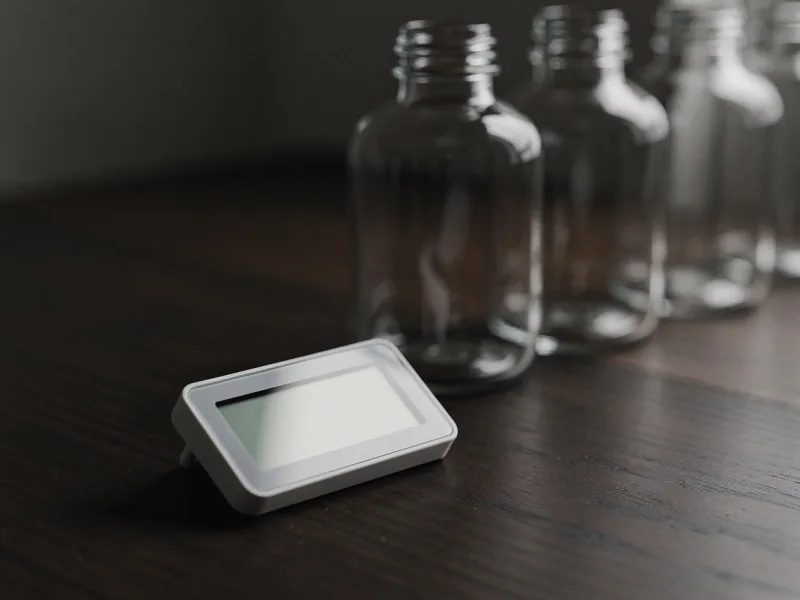
The right measuring device: a thermo-hygrometer
To start, a digital thermo-hygrometer that shows temperature and humidity at once is enough. When buying one, make sure it stores minimum and maximum readings. Otherwise you only see the moment you happen to walk into the cellar, and miss the warm night in August.
If you want more precision, get a data logger or a wireless sensor. Both record the readings at fixed intervals, and later you can see, as a graph, how the cellar behaves over days and seasons. Wireless sensors also send readings to a device in your home, so you don't need to go down to the cellar to check.
Where to measure in the cellar
Measure where the bottles actually lie, not at the door. Warm air rises, so it's often warmer near the ceiling than at the floor. If your bottles sit in a tall rack, it's worth adding a second measuring point higher up.
Don't hang the sensor directly on an outer wall or next to a heating pipe. Either one will skew the readings in one direction or the other. After setting up the device, give it a few hours to adjust to the room before taking the first reading seriously.
Checking a hygrometer yourself with the salt test
Even simple hygrometers can be off by a few percent when it comes to humidity. A simple test lets you check yours yourself. Above a saturated saline solution, the humidity settles at around 75 percent. The American standards institute established this fixed point back in 1977 in a series of measurements still cited today.
Here's how: Put some table salt in a small dish and add just enough water to create a damp paste with some undissolved salt still visible. Place the dish together with the hygrometer in a tightly sealed bag or container and leave both overnight at a constant room temperature. If the device then reads significantly more or less than 75 percent, you know its deviation and can factor it in going forward.
Too warm, too dry, too humid: what you can do
If the cellar gets too warm in summer, shade is the first fix: darken the windows and keep warm air out. If that's not enough, a wine fridge for your best bottles or a cooler spot in the house is often the simpler solution rather than air conditioning the whole room.
If the air is too dry, a large bowl of water or a damp stone in the room is often enough. If it's too humid, airing out only helps at the right time. The Hessian consumer protection portal warns explicitly: warm, humid summer air cools against the cold cellar walls, the water vapor condenses, and the cellar becomes more humid rather than drier. In summer, therefore, only air out early in the morning or during cool nights—better still in spring, autumn, and winter.
Light and vibration matter too
Besides temperature and humidity, light matters. The Australian Wine Research Institute measured how quickly wine develops a typical light-struck taste under lamp light: white wine in clear glass showed it after just a few hours in one trial, while green glass delayed it considerably. Sunlight has an even stronger effect. A cellar should therefore be dark, with the light switched on only when you're in there.
Light vibrations, say from a washing machine in the next room, are often overestimated. The same institute found no literature showing that the vibration from a cooling appliance harms wine. Still, your collection deserves a fixed spot without constant rearranging.
Keeping an eye on cellar climate with Gustofolio
Gustofolio shows you the current temperature and humidity for each storage location once you connect a sensor via Home Assistant. You set a target range for each storage location and see how long a value has been outside it. This way you catch a warm summer week before it harms your wines, and you always know at a glance what climate any given bottle is stored in.
Frequently asked questions about wine cellar climate
These questions come up often when someone measures their own cellar for the first time.
Is a cellar at 15 degrees Celsius too warm?
Not necessarily. The wine will age somewhat faster there than at 10 to 12 degrees Celsius. As long as the temperature stays steady and doesn't rise permanently above 20 degrees Celsius, the room is suitable for storage, especially for wines you plan to drink within the next few years.
How often should I measure?
The most meaningful approach is measuring over a full year, since summer and winter differ noticeably in a cellar. A device that records maximum and minimum values or logs readings over time saves you from checking daily.
Do bottles with screw caps need a specific humidity level?
Not for the closure itself, since a screw cap doesn't dry out. The labels, however, will still appreciate a mold-free climate.
When should I air out the cellar in summer?
Early in the morning or during cool nights, when the outside air is cooler than the cellar. When the air is warm and humid, it's better to keep the windows closed.