The short answer
Decanting means slowly pouring wine into a carafe. With old red wines and vintage Port, this separates the wine from its sediment; with young, robust red wines, it lets the wine breathe and open up more aroma. Most white wines and sparkling wines don't need a decanter, and for a single glass, swirling the wine in it is often enough.
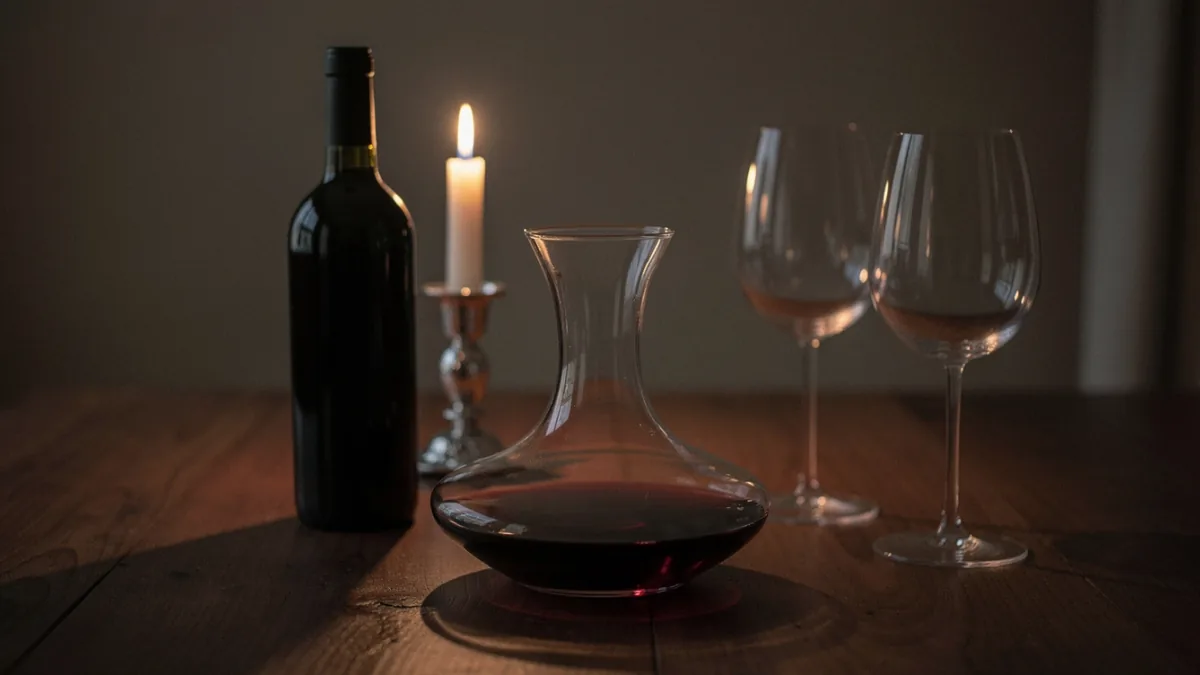
Decanting or aerating wine: what's the difference?
The word decanting actually covers two different goals. In the strict sense, it means carefully separating a wine from its sediment, the deposit. You do this by slowly pouring it into a carafe and leaving the sediment behind in the bottle. This mainly applies to older red wines.
The second goal is about air. Aerating, often also called carafing, means giving a young wine plenty of contact with air in the carafe so it opens up and shows more aroma. In everyday use, both are called decanting, and the vessel is called a decanter or carafe. In practice, all that matters is which goal you're pursuing with your bottle.
What aeration actually does to wine
Many people imagine that the wine reacts with oxygen in the carafe and becomes softer as a result. That's only partly true. Oxygen reacts with wine quite slowly, over hours or days, according to oenologists. In the short time before dinner, something else is mainly happening: volatile compounds are evaporating.
This helps especially with wines that smell of rotten eggs or burnt matches right after opening. Winemakers call this reduction or reductive notes. Hydrogen sulfide and free sulfurous acid dissipate quickly in air. Tannin often feels less harsh after aeration too, even though the chemistry behind it isn't fully understood.
Simply opening the bottle and letting it stand, on the other hand, does very little. In the narrow neck, only a small surface of the wine touches the air. Only when you pour it or swirl it in the glass does the wine get noticeably more contact with air. So if you want to give a wine air, you have to move it.
Which wines benefit from decanting
Young, robust red wines with plenty of tannin benefit the most, for example those made from Cabernet Sauvignon or Syrah. Right after opening, they can seem a bit closed, but in the carafe they show more aroma. When pouring these, feel free to let the wine splash vigorously into the carafe.
The second group is wines with sediment. Red wines often form a deposit in the bottle after about five to ten years, and vintage Port does too. The sediment clouds the wine in the glass and can taste bitter. Here you decant so the wine goes into the glass clear.
Which wines you're better off not decanting
White wines and sparkling wines rarely need a decanter. White wines barely form any sediment. If you find crystals on the cork or at the bottom of the bottle, that's usually tartrate, and it's not a wine fault. If you still want to serve a white wine from a carafe, there's nothing wrong with that, though it's generally not necessary.
Caution is needed with very old, delicate red wines, roughly from 15 years onward. Experts recommend decanting such wines only about 30 minutes before serving, because their aroma fades quickly in air. Here it's only about the sediment, and you pour as late as possible.
Decanting wine with a candle: step by step, separating from the sediment
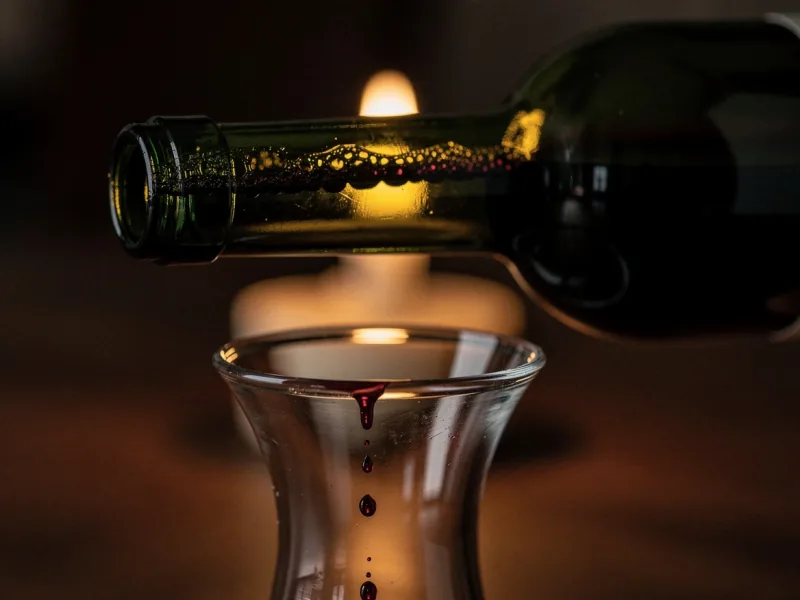
For a wine with sediment, you need patience and light. The light beneath the neck of the bottle shows you exactly when the sediment reaches the neck. Without light, you won't notice until the wine in the glass turns cloudy. So plan your decanting before the meal, not between courses. Here's how to do it:
- Stand the bottle upright at least 24 hours beforehand so the sediment settles to the bottom.
- Open it gently, without tilting or shaking it.
- Hold a candle or a flashlight under the neck of the bottle.
- Pour slowly and steadily into the carafe, ideally without pausing.
- Stop as soon as cloudiness or dark specks appear in the neck.
- Leave the last bit, along with the sediment, in the bottle.
Decanting wine: how long in advance?
There's no fixed time that works for every wine. Young, robust red wines can handle an hour or more in the carafe. Old, delicate wines should be poured just before serving. Even experts decide this bottle by bottle, sometimes even day by day.
Tasting is the surest way to know. Pour yourself a sip right after decanting, then try again later. If the wine still seems closed, let it sit longer. Whatever's left at the end of the evening, pour back into the bottle, since the wine gets too much air in the carafe overnight.
If you track your bottles in Gustofolio, you'll see the drinking window and serving temperature for every wine. That tells you, even before the evening starts, whether a wine is likely young and robust or already mature. That helps you decide whether to aerate it or just carefully separate it from its sediment.
Which decanter fits? Shapes and what really matters
For aerating, a carafe with a wide base and a bulging middle works well. The wide base stands securely, and the bulge gives the wine plenty of surface area. For old wines with sediment, you don't need that surface area. A simple vessel that lets you pour calmly and with control is enough here.
Two practical questions matter more than the shape. Can the carafe be cleaned easily? And does it sit securely in your hand while pouring? Ornate shapes look lovely but are hard to get properly clean. A simple glass carafe or a plain jug will do just fine to start.
| Shape | Suited for | What to watch for |
|---|---|---|
| wide base, bulging middle | young, robust red wines | plenty of surface area, stable footing |
| simple, slender carafe | old wines with sediment | steady pouring, minimal swirling |
| simple glass jug | everyday use and first attempts | easy to clean |
| ornate special shape | decoration on the table | hard to clean and pour from |
Aerators and pourers: what these little devices actually do
An aerator is a small funnel or spout that the wine bubbles through as you pour, picking up air along the way. It's faster than using a carafe, and you won't have to wash a decanter afterward. For young wines that benefit from air, it's a workable shortcut.
Its effect isn't guaranteed, though. Blind tastings with and without an aerator don't always come out in the device's favor. It's not suited to old, delicate wines, since they fade quickly in air. It doesn't separate sediment either. And no gadget can turn a weak wine into a good one.
Aerating wine without a decanter: a large glass is often enough
You don't need any special equipment for most wines. Swirling in the glass already brings enough air to the wine. This works best in a glass with a large bowl that you don't fill too full. That gives the wine room to breathe, and the aroma collects just below the rim.
The advantage lies in tracking the change. Sip by sip, you notice how the wine evolves. That's exactly what helps you judge next time whether a decanter is worthwhile for this wine. A wine that still seems closed on the first sip often shows much more after a few minutes in the glass.
Cleaning a Decanter Without Detergent Residue
Rinse the decanter with clear, warm water right after use, so nothing dries on. It's best to skip detergent, since its residue is nearly impossible to rinse away completely. Many decanters are meant for hand washing only, so it's worth checking the care instructions.
For stubborn red wine stains, it helps to let the decanter sit overnight with warm water. If water and time aren't enough, use cleaning beads: fill the decanter with warm water and beads, swirl thoroughly, then pour everything out through a strainer. Polish the outside with a microfiber cloth.
Frequently Asked Questions About Decanting
These questions come up almost every time, before someone fills a decanter for the first time.
Can I decant wine without a decanter?
Yes. Any clean glass carafe or jug will do the job. For aeration alone, a large glass in which you swirl the wine is often enough.
Does wine need to breathe?
Not every wine. Many wines taste great right after opening, and old wines can even lose character with air exposure. Aeration pays off mainly with young, powerful red wines and wines that initially smell of sulfur or rotten eggs.
Do you decant white wine?
Rarely. White wines hardly ever form sediment, and most don't need extra aeration either. A sufficiently large glass is enough for a glass of white wine.
How long can wine stay in the decanter?
Over the course of an evening, this is usually not a problem for young red wines, though older wines lose their aroma faster. No wine should stay in the decanter overnight. Pour the leftover wine back into a bottle, seal it, and put it in the fridge.