The short answer
Open wine lasts longest when tightly sealed and stored in the fridge with as little air above it as possible. White wine and rosé usually stay fresh for two to three days this way, red wine for about three to five days. Decanting into a smaller bottle is the simplest step; a vacuum pump only removes part of the air. For sparkling wine, cold and a proper sparkling wine stopper help—the spoon trick does not.
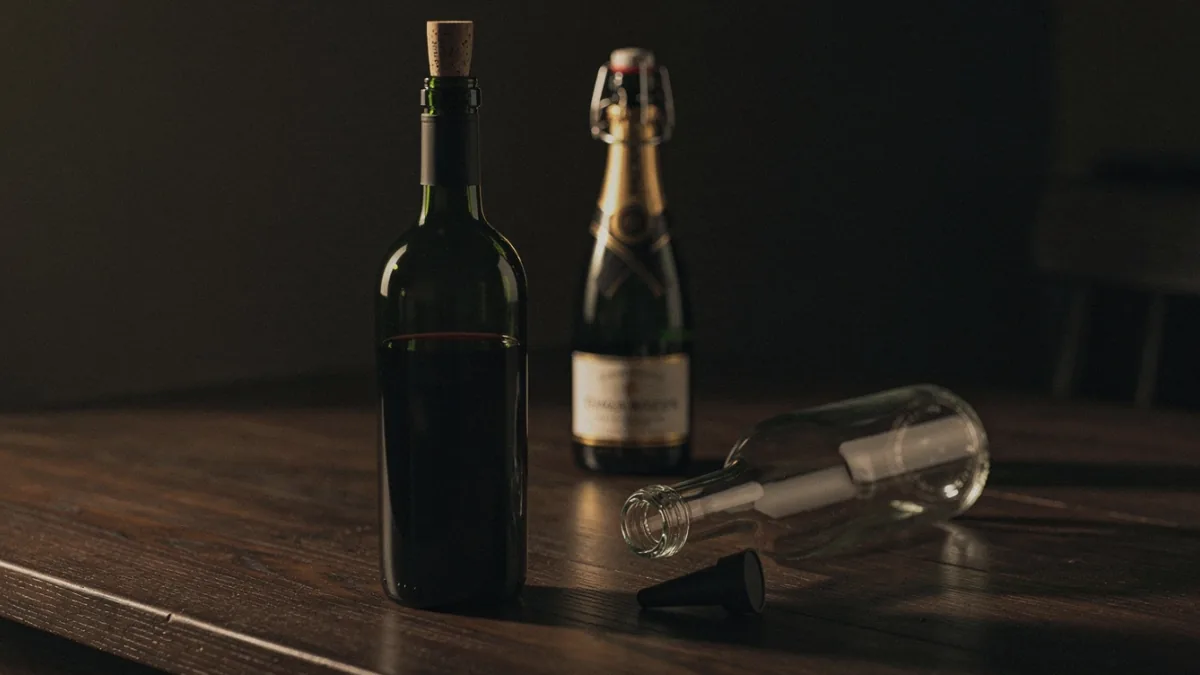
How long does open wine last? Guidelines by wine type
There's no fixed deadline for open wine. How quickly it declines depends on the style, the amount of air in the bottle, and the temperature. The figures in the table below come from specialist publications and apply to a re-sealed bottle stored cool. Treat them as guidelines—your own glass has the final word.
Fresh fruit character tends to fade first. After opening, most wines keep their youthful fruit for only one to two days. They often remain drinkable longer, but taste flatter. Old, delicate wines fade noticeably faster than young, robust ones.
| Wine type | Guideline after opening | How to store |
|---|---|---|
| Sparkling wine such as sparkling wine, Champagne, or Prosecco | 1 to 3 days | Fridge, sparkling wine stopper |
| White wine and rosé | 2 to 3 days, some styles up to 5 days | Fridge, cork or screw cap |
| Red wine | 3 to 5 days | Cool and dark, tightly sealed |
| Sweet wine | 5 to 7 days | Fridge, tightly sealed |
| Many fortified wines, such as Port | up to several weeks | Fridge, tightly sealed |
| Bag-in-box wine | 2 to 3 weeks | Fridge |
Open wine in the fridge: red wine too?
Yes, red wine included. Cold slows down oxidation—the reaction with oxygen that breaks down aroma and fruit. That's why the fridge is the simplest step for any opened bottle. This matters even more for sparkling wine, since carbon dioxide stays dissolved better in cold wine.
Some experts prefer to keep bold red wines in a cool, dark spot rather than the kitchen fridge, since cold emphasizes tannin and oak. This mainly affects the moment you pour it into the glass. So take the red wine out in good time, so it isn't too cold when served. You can find out which temperature suits which style in the article on serving temperature.
Sealing an opened bottle of wine: cork or screw cap
Reseal the bottle right after pouring. As long as the bottle stands open, fresh air keeps flowing in. The original cork or screw cap is usually enough for this. If the cork no longer fits the neck, use a rubber or silicone wine stopper instead.
People often ask whether wine with a screw cap stays fresh longer once opened. There are no separate, well-established timeframes for this. Either way, what matters is that the closure fits tightly and the bottle is then kept cold. Store it upright in the fridge, so nothing leaks out even if the cork is a bit worn.
Decanting: less air in a smaller bottle
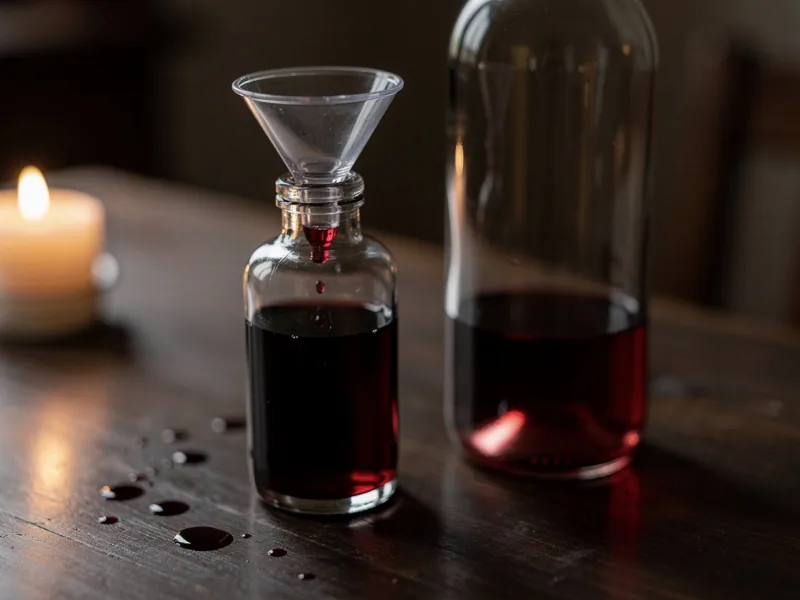
Oxygen sits in the empty space above the wine. The less air left in the bottle, the more slowly the rest ages. Experts therefore recommend transferring a half-empty bottle into a smaller container. All you need is a clean, small bottle with a tight seal.
Empty half-bottles of wine or small glass bottles with screw caps work well for this. Rinse them thoroughly with water so no dish soap residue remains. Pour the wine in slowly, right up to just below the rim. That way, barely any air remains above the wine, and the small bottle goes sealed into the fridge.
Wine vacuum pump: worth it or not?
A vacuum pump draws air out of the bottle through a rubber stopper. That sounds like it creates an airless bottle, but it doesn't. A hand pump can't achieve a full vacuum. In a documented test by a reference book author, oxygen remained in the bottleneck even after many pump strokes. Experts also point out that some stoppers let air back in over time.
Still, the pump isn't useless. In the same test, a half-full red wine held up fairly well with the pump for over five days at room temperature. Whether pumping causes some loss of aroma is debated among experts, though it hasn't been firmly proven. The pump does the most good when the bottle then goes into the fridge.
Never use a vacuum pump on Champagne, sparkling wine, or other sparkling wines. If the pressure above the wine drops, dissolved carbon dioxide escapes. That's exactly how home winemakers deliberately degas young wine on purpose. For sparkling wine, you need the opposite—a closure that holds the pressure in.
Inert gas and argon: a layer over the wine
Inert gas sprays work the opposite way from a pump. You spray a gas into the bottle that doesn't react with the wine, such as argon. Argon is heavier than oxygen and settles over the wine like a blanket. This makes it harder for oxygen to reach the surface.
The order matters: spray briefly, then seal immediately. Inert gas doesn't remove all the air either—in the test mentioned above, a small amount of oxygen remained. Even so, experts generally consider this method better justified than the vacuum pump. Combine it with fridge storage and a tight seal.
Wine preservation systems with a needle: pouring without uncorking
Needle-based wine preservation systems go a step further. A thin hollow needle pierces the capsule and cork, the wine flows out, and argon flows into the bottle to replace it. You never actually pull the cork. A natural cork mostly closes back up after such a fine puncture.
This only works with natural cork, including agglomerated cork made from cork granules. Plastic corks usually don't reseal properly after being pierced. Separate attachments are available for screw-cap bottles.
A system like this makes the most sense if you want to taste valuable wines by the glass, or if you often only drink a single glass at a time. It lets you enjoy a special bottle over several evenings without ever fully opening it. For everyday wine, the fridge and decanting into a smaller bottle are more than enough.
Keeping sparkling wine fresh: does the spoon trick work?
No. The spoon-in-the-bottleneck trick is a stubborn myth, and it's been tested twice. Researchers at Stanford University put open bottles in the fridge for 26 hours in 1994, some with a spoon, some without. In a blind tasting, the wine with the spoon was no fizzier.
Around the same time, the Champagne producers' trade association in Épernay measured the pressure in open bottles. With or without a spoon, it dropped in exactly the same way. What actually helps is cold, along with a sparkling wine stopper with clamping wires that holds the pressure in the bottle. This way, the remainder usually stays fizzy for one to three days.
How to spot wine that's gone off
A wine that's been open too long gives off warning signs. First, aroma and flavor turn dull, and the fruit disappears. The color looks duller, and red wine often shows a brownish rim. Later, the wine smells and tastes nutty or like bruised fruit—that's oxidation.
If it smells sharply of vinegar, acetic acid bacteria have been at work. That wine is no longer enjoyable to drink. If you're unsure, compare it side by side with a glass of a freshly opened wine of a similar style. The comparison trains your nose faster than any description could. In the end, you set your own limit: some people are still happy with a wine on day three, while others are done with it by day two.
Frequently asked questions about open wine
These questions come up again and again around opened bottles.
Does opened wine go bad?
Yes, eventually it always does. Oxygen strips away the fruit first, and later acetic acid bacteria can turn it sour and sharp. A fridge, a tight seal, and minimal air slow this process down, but they can't stop it.
Does wine with a screw cap last longer once opened?
There are no separately documented timeframes for this. Cork or screw cap—either way, it needs to seal tightly, and the bottle belongs in the fridge. Then the guidelines from the table above apply.
Can I leave the rest in the decanter?
Better not to. In a decanter, the wine has a lot of surface area and therefore a lot of contact with air. Pour any leftover wine back into the bottle or into a smaller one, seal it, and keep it cold.
Does this also apply to alcohol-free wine?
Not without some care. For alcohol-free wine, the first thing to check is what the manufacturer has written on the bottle about chilling and use-by time after opening.