The short answer
The value of a whisky is determined mainly by the distillery's reputation, the age and type of bottling, the release, and the condition of the label, fill level, and packaging. Actual auction results for comparable bottles serve as a real benchmark, while dealers' asking prices tend to be higher. For insurance or inheritance purposes, a list with photos, purchase receipts, and storage location is a big help.
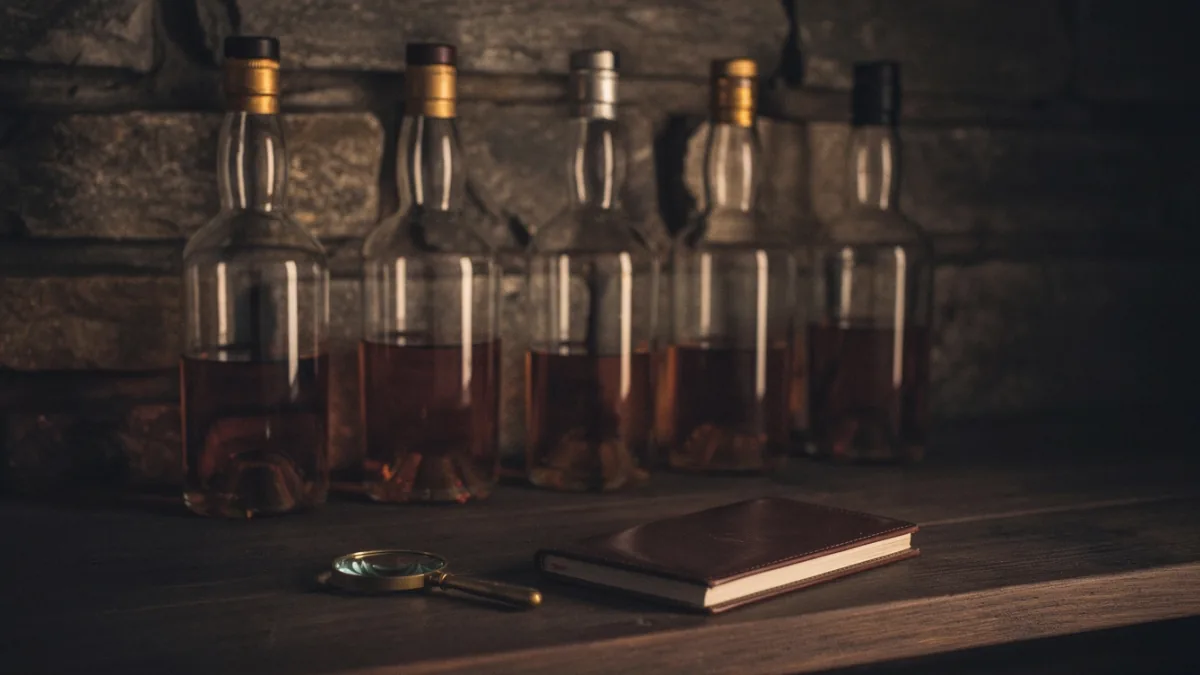
What determines the value of a whisky bottle?
Whether a bottle is worth more today than at the time of purchase isn't decided by age alone. A whisky specialist at a major auction house names the points checked during a valuation: the condition of the bottle, its provenance, the brand's reputation, the vintage, how long the bottle has been in your possession, and whether it belongs to a collection.
Many bottles in the cabinet are simply drinking whisky, and that's perfectly fine. Even old or limited bottlings aren't automatically sought after. An analysis firm specializing in rare whiskies notes that some bottles find hardly any buyers despite similar age or seemingly similar rarity. The overview below shows what collectors look for in a bottle.
| Feature | What collectors look for |
|---|---|
| Distillery | Reputation and history; closed distilleries with a finite supply |
| Age and vintage | Age statement, distillation and bottling year |
| Bottling | Single cask, bottling for an occasion, discontinued series |
| Batch | Bottle and cask number, if stated |
| Condition | Label, closure and fill level |
| Packaging | Original box or tube |
| Provenance | Proof of purchase, previous ownership, storage |
Reading distillery, age and bottling correctly
According to the analysis firm, a distillery's reputation is one of the strongest drivers of value. This is especially clear with closed distilleries. No more spirit is being distilled there, and with every bottle opened, the remaining stock shrinks further. So first ask yourself whether the distillery is still operating and how well known it is among collectors.
The age statement on a Scotch whisky names the age of the youngest whisky in the bottle. Only time spent in the cask counts. The Scotch Whisky Association makes this clear: a twelve-year-old whisky remains twelve years old, even if you keep it for a hundred years. Sitting in a cupboard for longer doesn't make it any older.
It's worth taking a second look at the bottling itself. A single cask for a particular occasion, a whisky from a well-known production period, or a discontinued series can all attract collectors. If a cask number or bottle number appears on the label, make a note of it. You'll need these details later for any price comparison.
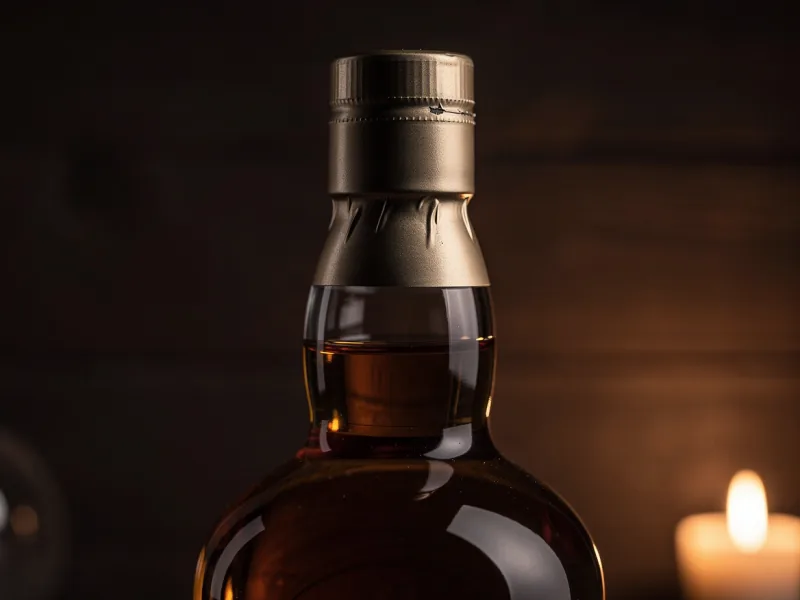
Condition, fill level and packaging
According to the analysis firm, collectors favor bottles with a high fill level, a clean and undamaged label, original packaging and solid provenance. A torn label or a missing box can therefore weigh more heavily than you'd expect on a sought-after bottle. Store valuable bottles upright, in the dark, and away from big temperature swings. Direct sunlight damages whisky, says the Scotch Whisky Association. Keep the box, even if it just sits empty in the cellar.
The fill level says a lot about how a bottle has been stored. Most bottles are filled to around the middle of the neck at bottling, according to a whisky trade magazine. If the level sits noticeably lower, some evaporation has occurred over the years. Photograph the fill level straight from the side, so you can compare it later.
Determining whisky value: which prices actually count?
For market value, what matters is what comparable bottles have actually achieved. At auction, that's the hammer price. Retail asking prices sit higher, since dealers buy their stock at auctions, from wholesalers, or from private collections and add their margin.
Compare as closely as possible: the same bottling, the same bottling year, a similar condition. A bottle with its box and a high fill level is no benchmark for your bottle without one. Look at several results across different months, since a single record price tells you little about your own bottle.
What you paid and what an auction house confirms as value are two different things, says the trade magazine. Values move with the market. For expensive individual pieces, get a valuation from a reputable source, such as an auction house with a spirits department or an independent appraiser.
Spotting fake whisky: documented red flags
Counterfeits are no minor issue when it comes to rare bottles. A research centre run by Scottish universities examined 55 rare Scotch bottles from the secondary market using radiocarbon dating. 21 of them turned out to be fakes or didn't match the stated distillation year. Every single malt whisky supposedly distilled around 1900 or earlier proved to be fraudulent.
A whisky trade magazine describes features you can check yourself. None of them proves anything on its own. If you notice several at once, have the bottle checked before buying or selling. The list is no substitute for lab analysis, but it helps you spot a suspicious bottle early.
- Capsule: if it sits loosely or spins freely around the neck, it may have been replaced.
- Label: under a magnifying glass, pixelation or vertical streaks can reveal a reprint. Fresh glue can sometimes be felt at the edges.
- Text: spelling mistakes or details that don't fit the supposed era.
- Fill level: bottles from the 1960s or earlier with a suspiciously high fill level in the neck are cause for concern.
- Sediment: whiskies bottled in the 1970s or earlier often show a bit of sediment, especially those from sherry casks.
- Shape: the bottle's outline and the curve of the base should match confirmed genuine reference bottles.
Documenting a whisky collection for insurance and inheritance
Without proper records, any question of value becomes difficult, whether after a burglary or when dividing up an estate. According to the trade magazine, a self-kept list with full descriptions, photos and proof of purchase counts as solid evidence of ownership, provenance and value. Start with the most expensive bottles and work your way down.
For each bottle, record at least the country, distillery, name, age or vintage, ABV, volume, purchase price, storage location, and whether it's open. For more valuable pieces, add the purchase date, retailer, bottling date, cask type, and notes on the condition of the closure, label, packaging and fill level.
Police forces offer a valuables list template. It helps with insurance claims and, after a burglary, with the investigation. The North Rhine-Westphalia consumer advice centre recommends keeping copies outside the household, for example with relatives or stored digitally. What proof your insurer requires is set out in your policy, so ask them directly if you're unsure.
Is whisky a safe investment?
No, there's no guarantee. In 2023, the UK's advertising watchdog stated in guidance on whisky cask investment ads that these investments are not regulated by the Financial Conduct Authority in the UK. Their value can fall, and the usual compensation and dispute-resolution schemes don't apply.
The same principle applies to individual bottles. Prices are driven by demand, and demand can fade. Anyone promising you guaranteed returns deserves your suspicion. It's best to buy whisky you'd actually enjoy drinking. If the market price drops, you're at least left with a bottle you like.
How Gustofolio helps you document your collection
In Gustofolio, you photograph a whisky bottle using the app's camera. It reads the distillery, age, cask type and strength straight off the label. You capture the front and back in sequence, and when cataloguing a larger collection, several bottles can be added one after another. In the cellar, you set the storage location right down to the shelf, and any later moves are logged in the history.
You can export your collection as a PDF, Excel or CSV file. Keep the PDF alongside your proof-of-purchase documents, and use the Excel file for insurance purposes or to pass on to family. Your data is stored in a data centre in Frankfurt am Main, and your collection stays private until you choose to share something yourself. You'll still need to determine the market value of individual bottles via auction results or a professional valuation.
Frequently asked questions about the value of a whisky collection
These questions come up almost every time someone wants to value or insure a collection.
Does whisky become more valuable in the bottle?
Not through ageing. Whisky only matures in the cask; once bottled, it stays exactly as old as the label says. If the price rises, that's down to demand for that particular bottling.
Is an old bottle found in the cellar automatically valuable?
No. Old age or a small batch size alone don't make a bottle desirable. Compare your find against genuine auction results for the same bottling in the same condition.
How often should I review the values?
For insurance valuations, the trade magazine suggests a three-to-five-year interval, while noting that the whisky market moves faster than that. For expensive bottles, it's worth checking more often.
Do I have to pay tax on selling my collection?
There's no blanket answer. German income tax law covers private sales where less than a year has passed between purchase and sale, and it excludes everyday items. How this applies to your bottles is something to clarify with a tax advisor. Dated proof of purchase helps with that.