The short answer
Tell your server or sommelier what you're eating, whether you prefer something light or full-bodied, and what price range you'd like to stay in. When you taste the wine, you're only checking that it's sound, not whether you personally like it. You're entitled to send a bottle back if it's faulty, for example if it smells musty from cork taint.
How to read the wine list
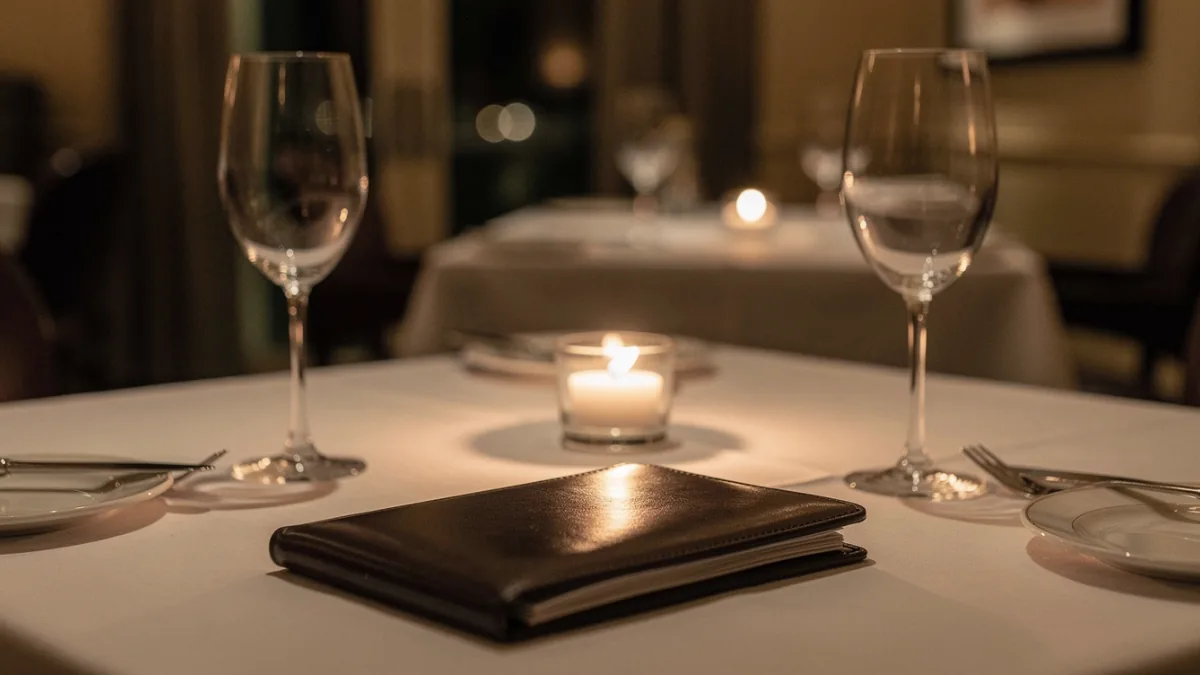
Many wine lists follow a set order: sparkling wines first, then whites, rosés, reds, and dessert wines at the end. Within these groups, wines are often sorted by country or region. Each entry usually shows the producer, the wine's name, the vintage and the price.
At the top of the list, or on a page of its own, you'll find the wines by the glass. These are wines served in smaller pours, often listed with a measure such as 100ml or 200ml. They're the easiest option when everyone at the table is eating something different, or when you just want to try a grape variety first.
Glass, carafe, or a full bottle?
A standard bottle holds 750ml. That's roughly seven and a half 100ml glasses, or just under four 200ml glasses. If two of you are having a couple of glasses each over the course of the evening, a bottle usually makes sense. If only one of you is drinking wine, wine by the glass is the better choice.
Some restaurants also offer wine by the carafe or in half bottles. That's handy if you want white wine with one course and red with the next. Feel free to ask, even if it's not printed on the list.
Asking the sommelier the right way
A sommelier can help you best if you tell them three things: what you're eating, what you enjoy drinking, and how much you'd like to spend. Simple words are enough when it comes to taste. "Something light and crisp" or "full-bodied with plenty of fruit" tells a professional more than a technical term you only half know. Mentioning a wine you already know and love helps even more.
You don't need to announce your budget out loud to the whole table. Just point to a wine on the list in roughly the price range you have in mind and say you're looking for something along those lines. Any good sommelier will understand immediately.
The bottle is presented
Before opening the bottle, your server will show it to you with the label facing out. This isn't just an empty ritual. This is the moment to check that it's really the wine you ordered: same producer, same wine, same vintage. A different vintage can taste quite different and carry a different price.
If something's not right, say so now, before the bottle is opened. If only the vintage differs, you can still accept it if you're happy with that. But it's your call.
The tasting pour: what you're actually checking
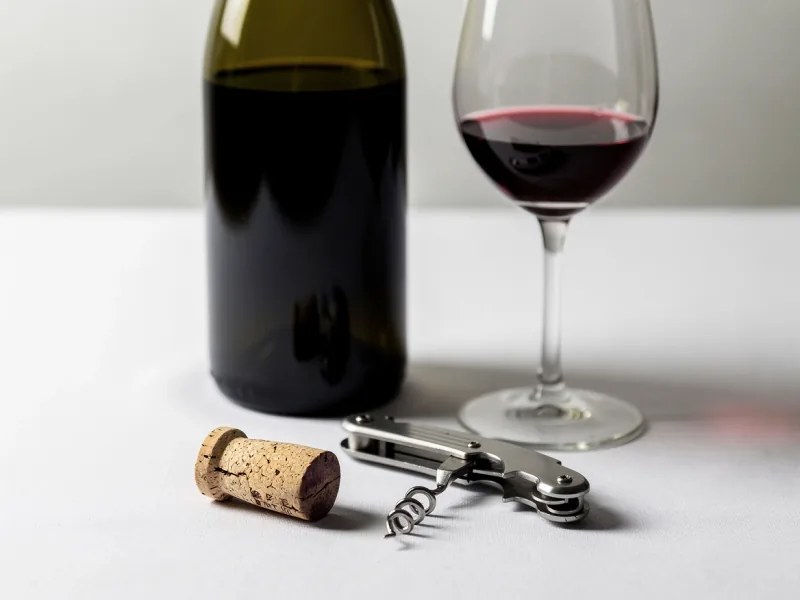
After opening, whoever ordered the wine gets a small pour in their glass. Many people think they're supposed to judge whether they like the wine at this point. That's not actually what it's for. You're only checking whether the wine is sound or faulty.
Start by nose. A healthy wine smells of fruit, blossom, spice or oak, depending on the style. If it smells musty, damp, or like wet cardboard, it may be corked. If it smells flat, like cardboard or straw, or already like sherry when it shouldn't, it's probably oxidized. The Australian Wine Research Institute describes both as classic wine faults. If everything checks out, a simple nod is enough, and the other glasses get poured.
When you're allowed to send a wine back
You're entitled to send back a wine that's faulty: corked, oxidized, or with some other clear flaw. Wine writer Jamie Goode puts it simply: fault is the only acceptable reason to reject a wine. That it simply isn't as good as you'd hoped, on the other hand, is a risk you take when ordering.
If you're unsure, ask your server or the sommelier to taste it themselves. This is standard practice, and no one takes offense. If the wine is faulty, you'll get a new bottle. One sensible exception: if the sommelier recommended the wine and it just doesn't suit your taste at all, you're allowed to say so. A good sommelier will then suggest an alternative, since happy guests matter more to them than one bottle.
If the temperature is off
A white wine served ice-cold shows barely any aroma. It will warm up quickly in the glass, though, so you can simply wait a few minutes. A wine served too warm is trickier, and in restaurants that surprisingly often happens with red wine. The German Wine Institute recommends just 16 to 18°C (61-64°F) even for rich, mature reds, and dining rooms are often warmer than that.
In that case, feel free to ask for an ice bucket for a few minutes. This is a common request, and the wine will taste rounder and less alcoholic afterwards.
Bringing your own wine: corkage
Some guests bring a special bottle to the restaurant, say for an anniversary. Many restaurants charge a corkage fee for this. It's essentially compensation to the venue for the guest drinking their own wine rather than one from the list.
Ask before your visit whether bringing your own wine is allowed and what it costs. Not every restaurant permits it, and the fees vary quite a bit from place to place.
Reading the wine list with Gustofolio
If the list feels overwhelming, photograph it with Gustofolio. Within about ten to fifteen seconds, you'll see for each wine whether it's light, medium, or full-bodied, what defines its character, and which dishes it pairs with. Gustofolio estimates the typical style. The decision at the table is still yours, and the sommelier will know the specifics of any individual bottle.
Frequently asked questions about ordering wine at a restaurant
These are questions many people have before ordering wine for the table for the first time.
Can I send a wine back if I just don't like it?
Not really, if it's sound. It's different if the sommelier recommended the wine and it doesn't suit your taste at all. In that case, say so openly; there's usually an alternative to be found.
How many glasses are in a bottle of wine?
A 750ml bottle yields about seven and a half 100ml glasses, or just under four 200ml glasses.
What is corkage?
A fee restaurants charge when you bring your own wine to drink there. Ask beforehand whether it's allowed and how much it costs.
Do I really have to drink the tasting pour?
Smelling it is usually enough to catch a cork fault. A small sip gives you extra confidence. Whoever ordered tastes first, then the other glasses get poured.