The short answer
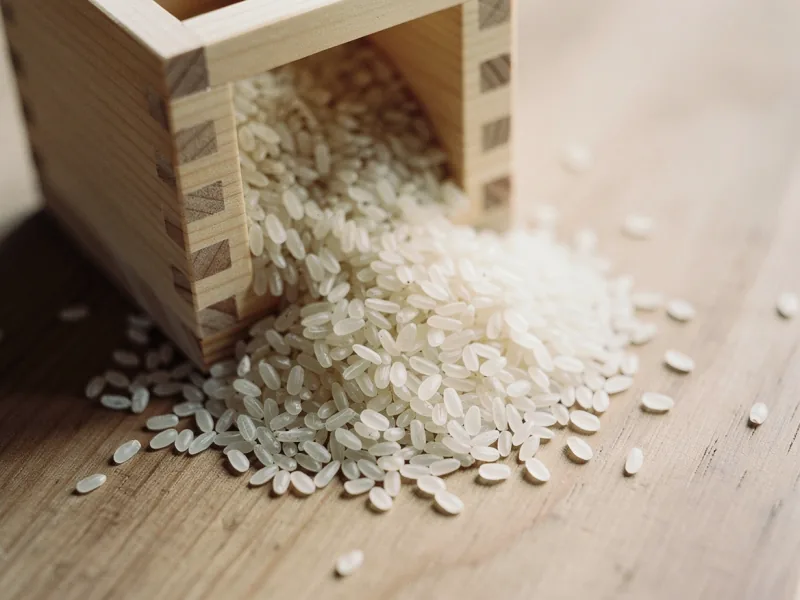
Sake is a fermented drink made from rice. Nothing is distilled here. Yeast turns sugar into alcohol, similar to beer. A schnapps is made differently: an already fermented drink is heated and the alcohol vapor is captured again. That step is missing in sake production. That's why the term "rice schnapps" is misleading.
Rice, kōji, and yeast
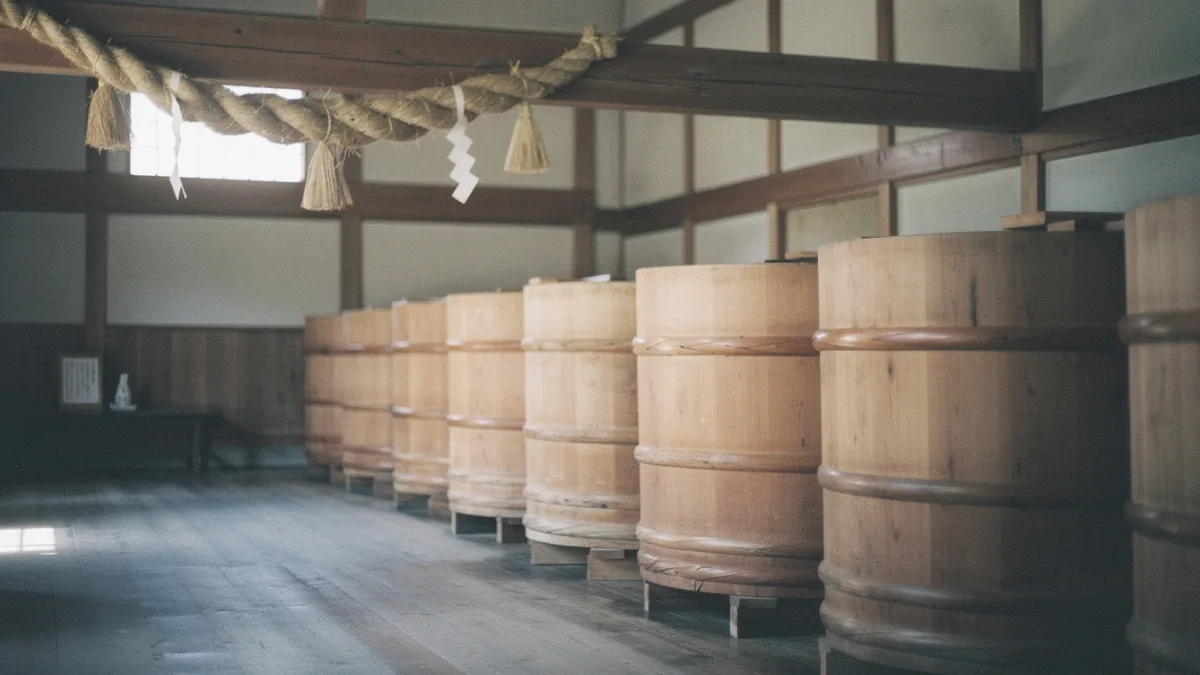
Yeast can't do anything with starch. It needs sugar. But rice consists almost entirely of starch and doesn't bring any sugar of its own. Kōji fills this gap: a mold that's applied to steamed rice. It converts the rice starch into fermentable sugar, and the yeast then turns that into alcohol.
The special part is the order of operations, or more precisely, that there isn't one. The mold breaks down the starch, and the yeast immediately takes up the sugar as it's released. Both happen at the same time in the same vessel. Two jobs, one container.
There's no equivalent to this in Europe. The grape delivers its sugar ready-made, and the winemaker only lets the yeast do its work. In beer, malted grain handles the conversion, in its own step before fermentation. In sake, a mold does this job, and the two steps don't separate.
That's why "rice wine" is just as imprecise as "rice schnapps." Nothing is distilled, and the process has little to do with winemaking. It comes closest to brewing beer, without being the same.
How a sake ultimately tastes is decided at many small points during production. Worlds can lie between two bottles. One comes across fruity and light, the next grainy, a third savory and full-bodied. So the category alone tells you nothing about the taste.
For you as a drinker, this means: expect neither wine nor schnapps. The base tone is soft and grainy. Whether fruit, spice, or savory notes sit on top depends on the brewery's style.
Don't automatically serve it hot
There's no single correct temperature for sake. Start by following the recommendation for the specific bottle. It applies to that particular sake, not to the whole category.
The custom of serving sake hot dates back to a time when warmth made simpler qualities more approachable. Heat covers up rough edges. But it also covers up the aroma.
With a delicate, fruity sake, that's exactly what you paid for, and it disappears. Bold, savory styles, on the other hand, take well to warmth and become rounder. What's meant here is body temperature. Hot is something else entirely.
With sake, temperature isn't a minor detail, it's a control dial. The same sake feels fresher and tighter when cool, softer and broader when warm. You're not changing anything about the contents of the bottle. You're only changing what reaches you from it.
If you want to test this yourself, compare small amounts at the recommended temperatures. Two glasses side by side will show you more than any advice. Pay attention to what happens to the aroma as it warms up.
When shopping, ask about the style: more fruity and light, or more bold and savory? That one answer helps you twice. You'll know how to serve it, and you'll already narrow down the right food pairing.