The short answer
Dornfelder is a red grape variety. The wines are usually very dark in color. Some taste mainly of fruit, while others carry a strong influence from oak barrel aging. Whether a bottle is dry or sweet isn't revealed by the variety name. That information appears elsewhere on the label.
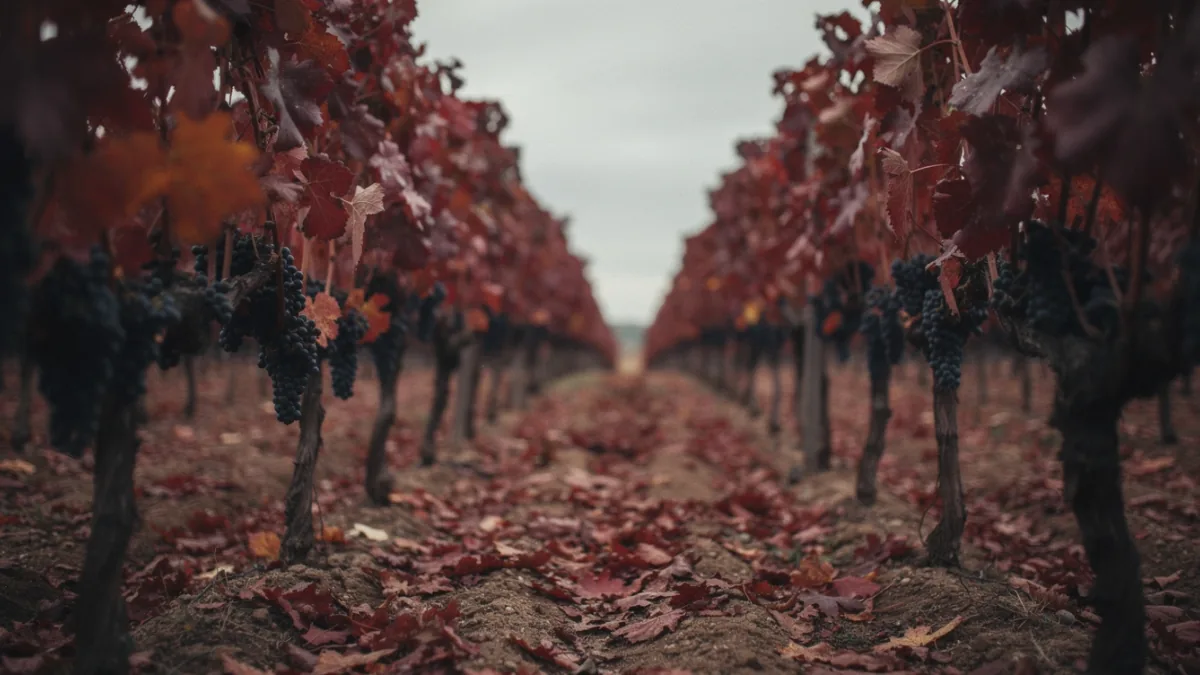
Consider color and taste separately
This is a young variety. Breeders created it in 1955 by crossing two other vines, Helfensteiner and Heroldrebe. Many compare the aroma to sour cherry and dark berries. Some bottles bring this fruit character to the fore. Others focus more on tannin, the substance that makes your mouth feel rough and dry.
The dark color is immediately noticeable. But it says nothing about how sweet or how full-bodied a wine is. Anyone who judges only by appearance overlooks exactly the differences that matter.
For a grape variety, 1955 is practically yesterday. So there's no centuries-old tradition that every producer must live up to. The winemaker decides for themselves which direction to take the wine. They can bring the fruit to the forefront, or focus on tannin and oak aging. That's why two bottles with the same name can differ so widely.
You perceive fruit and tannin at different points. You smell the fruit even before the first sip. You feel the tannin only afterward, on the gums and inside the cheeks. The sensation is similar to strongly brewed black tea: slightly rough, slightly drying. Consciously separate the two. Then you'll understand more quickly why you like one bottle and not the next.
Say which style you're looking for
Do you know a sweet Dornfelder and want something similar? Then say explicitly that the wine should be sweet. Sweet simply means noticeably sweet. The reverse applies too. If you drink dry wines, you don't need to avoid the variety — just ask for a dry style.
A dry, fruity Dornfelder pairs well with a hearty stew or braised dish. With a sweetish sauce or a lot of spice, it's better to taste first. Jot down two sentences after the meal. Did the dark fruit come across nicely? Or was the wine overall too heavy for you? Notes like this tell you more than a blanket judgment about the whole variety.
At the shop, you'll get further as soon as you describe the style and not just name the variety. Say whether the wine should be dry or sweet. Also mention whether you prefer it light and fruity, or fuller-bodied with noticeable tannin. The variety name alone narrows things down too little. It leaves both directions open.
How to find a Dornfelder you'll enjoy
From the following four points, you'll learn above all one thing: the variety name is the least important part of your decision.
After buying, it's worth jotting down a quick note. Write down the producer, the taste indication from the label, and your impression in two keywords. Next time you shop, you'll have a tangible point of reference. Simply remembering a wine that was "somehow dark and somehow fruity" won't get you very far.
| Step | Specific question or action |
|---|---|
| In conversation | Dry or sweet, fruit-forward or oak-influenced? |
| On the label | Dark color isn't an indicator of sweetness. |
| When tasting | How full-bodied does the wine feel in your mouth? |
| Your comparison | Judge color, sweetness, and tannins separately. |
Dark doesn't mean sweet
The most stubborn misconception is that Dornfelder is always semi-sweet. This reputation comes from a handful of sweet examples. The grape variety itself doesn't determine this. Whether a winemaker made the bottle dry or sweet is stated on the label. The variety name says nothing about it. Anyone who avoids Dornfelder for this reason misses out on all the dry versions.
Just as common is the assumption that color indicates power. A deep, dark red says nothing about the alcohol in the glass. It also reveals nothing about the residual sugar, meaning the sugar that remains in the wine after fermentation. A very dark wine can taste light and juicy. A paler one can certainly be more demanding.
How to compare styles at home
The fastest way to learn this is through your own comparison. Take two bottles of Dornfelder that differ in their stated sweetness level. Open both on the same evening. Serve them slightly cooler than room temperature, use the same type of glass for both, and pour only a small amount. Smell both glasses first. Only taste afterward.
Pay attention to which wine you still enjoy after the second sip. Sweetness often seems pleasant at first. With food, it can become cloying. Tannin, on the other hand, sometimes needs a bite of food before it becomes enjoyable. This is exactly the distinction you can put into words the next time you shop.